



Tooth loss can disrupt daily life, affecting speech, eating habits, and confidence. Modern dental technology offers hope by providing innovative solutions for replacing missing teeth. Whether someone has lost one tooth or several, today’s options are more effective and less invasive than in the past. These advancements also ensure that patients can enjoy restorations that look and feel natural, while making personalized treatments more accessible. For those exploring options from traditional implants to dentures, there are now more effective ways to restore oral health and appearance.
Staying informed about these developments is vital for making the best decisions about dental care. The newest methods aim to make tooth replacement more comfortable, long-lasting, and lifelike. In this article, we review several cutting-edge options, discussing both proven techniques and those on the horizon. Understanding these solutions will empower individuals to seek tailored dental care, improve oral function, and regain a confident smile.
One of the most significant improvements in modern dental care is the availability of personalized and comfortable restorations. Instead of a one-size-fits-all approach, dentists can now customize solutions for each patient’s mouth, ensuring both comfort and aesthetic appeal. Innovations have also brought shorter recovery times and more predictable outcomes.
With these exciting developments, people who have postponed dental care due to fear or uncertainty now have practical and minimally invasive options. Advanced techniques, such as digital scans and 3D-printed models, enable more individuals to regain their oral health quickly and efficiently.
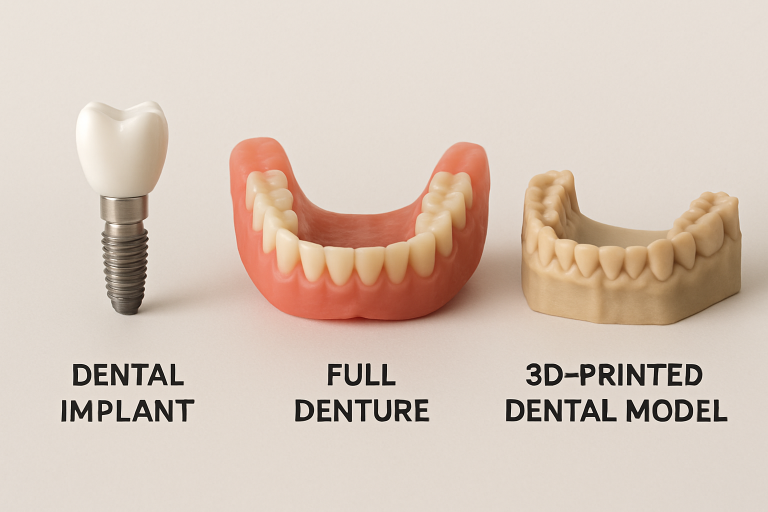
Table of Contents
Traditional Dental Implants
Traditional dental implants are the long-standing gold standard for tooth replacement. The procedure involves placing a titanium post into the jawbone, which acts as an anchor for a custom-made crown. This method offers stability, durability, and a natural appearance. Implants typically last 15 years or longer when properly cared for, with a reported success rate of up to 95 percent, according to WebMD. This makes them a popular choice for those with adequate bone density seeking permanent results.
All-on-4 Implants
The All-on-4 technique addresses the needs of patients requiring a full arch of replacement teeth. Four strategically positioned implants are inserted into the jaw, maximizing the existing bone and supporting a complete prosthetic arch. The approach eliminates the need for bone grafts in many cases and offers same-day results; patients can often leave with functional teeth soon after surgery. Recovery times are shorter, and patients experience improved comfort and biting ability. According to Wikipedia, All-on-4 is ideal for those with significant tooth loss or bone deficiency.
3D-Printed Dentures
Digital dentistry has led to the development of 3D-printed dentures. Dentists now use digital scanners to create precise models of a patient’s mouth, which are then used to fabricate custom dentures with advanced 3D printing technology. This process results in a better fit, improved aesthetics, and faster turnaround times compared to traditional methods. In addition, rapid prototyping lets patients preview and modify their dentures before final production. This breakthrough offers greater comfort and convenience for those who need removable restorations, according to AARP.
Root-Analogue Implants
Root-analogue implants are an innovative approach designed to mimic the original shape and size of an extracted tooth’s root. By crafting a custom implant (often zirconia) that precisely fills the natural socket, this method aims to fit perfectly and encourage faster healing. Immediate placement after tooth removal minimizes bone loss and surgical trauma. Their biocompatible materials also ensure a natural aesthetic, providing a metal-free alternative to titanium-based solutions. For more on this technique, visit Wikipedia’s entry on root-analogue dental implants.
Lab-Grown Teeth
Researchers around the globe are working on lab-grown tooth replacements. This futuristic technique involves cultivating tooth-like structures in a lab using a combination of living cells and biomaterials. The goal is to create natural, biological replacements that the body recognizes and integrates with, potentially eliminating many complications associated with synthetic implants. Though clinical application is still in the early stages, success in the lab has generated optimism for the future of regenerative dental care. For updates and research progress, see the coverage at Live Science.
Stem Cell Therapies
Complementing efforts to grow lab-grown teeth, stem cell research is at the forefront of the next wave of dental advancements. Scientists are experimenting with ways to harness a patient’s own stem cells to regenerate new, healthy teeth in place of lost ones. Although not yet available for clinical use, studies indicate that triggering the growth of a complete tooth may be possible in the future. This would provide the most natural solution to tooth loss, as new teeth would grow from the jawbone itself. Until these therapies become widespread, continued research and clinical trials are needed to ensure safety and effectiveness. Read more about dental breakthroughs at AARP.
Digital Dentistry and AI
Digital tools and artificial intelligence (AI) are transforming the way dental professionals approach implant placement and restorative care. Technology such as intraoral scanners and 3D imaging allows for highly accurate models of a patient’s mouth, ensuring implants are positioned for both function and aesthetics. AI-powered systems assist with treatment planning by predicting outcomes and tailoring procedures to individual anatomy and needs. These innovations offer patients greater predictability, improved long-term success rates, and a more comfortable experience. Information on digital dental care can also be found at The New York Times.
Conclusion
The field of tooth replacement is rapidly evolving, bringing new hope to those impacted by tooth loss. With advances in materials, digital modeling, and regenerative techniques, patients now have more choices than ever before. These developments not only provide more natural-looking results but also make the entire experience more comfortable and efficient. For anyone considering solutions like dentures or dental implants, a thorough consultation with a knowledgeable dental professional is the first step toward finding the method that best meets their needs. Embracing these advances means better oral health and the confidence that comes with a restored smile.