




Cloud DevOps has emerged as a foundational approach for modern organizations seeking to improve how software is built, deployed, and maintained. By combining cloud computing with DevOps principles, businesses can streamline collaboration between development and operations teams, automate repetitive tasks, and create more adaptable technology environments. This shift supports faster release cycles, improved system reliability, and better alignment between technical processes and evolving business needs, without being tied to a specific industry or location.
As digital systems grow more complex, cloud DevOps also changes how organizations manage resources, security, and scalability. Practices such as continuous integration, continuous delivery, and infrastructure-as-code help reduce manual errors and improve visibility across workflows. In this context, some organizations explore options such as DevOps outsourcing to access specialized skills or manage operational demands more efficiently. Overall, cloud DevOps represents a strategic evolution in how businesses structure their IT operations to remain resilient, responsive, and prepared for ongoing technological change.
Table of Contents
Understanding Cloud DevOps
Cloud DevOps blends the core principles of software development and IT operations, streamlining the process of building, testing, and deploying applications while utilizing the cloud’s flexibility and scalability. Key elements include continuous integration and continuous delivery (CI/CD), automated testing, and infrastructure-as-code (IaC). These strategies enable organizations to deliver frequent, incremental updates that improve software quality and customer satisfaction.
Transitioning to a DevOps-enabled cloud infrastructure breaks down traditional silos between development and operations, fostering greater communication and shared ownership of outcomes. This is especially critical in large enterprises, where coordination and rapid iteration are necessary to remain competitive.
As digital transformation accelerates, the adoption of cloud DevOps is rapidly becoming the standard for businesses aiming to outpace their rivals and maintain a strong growth trajectory.
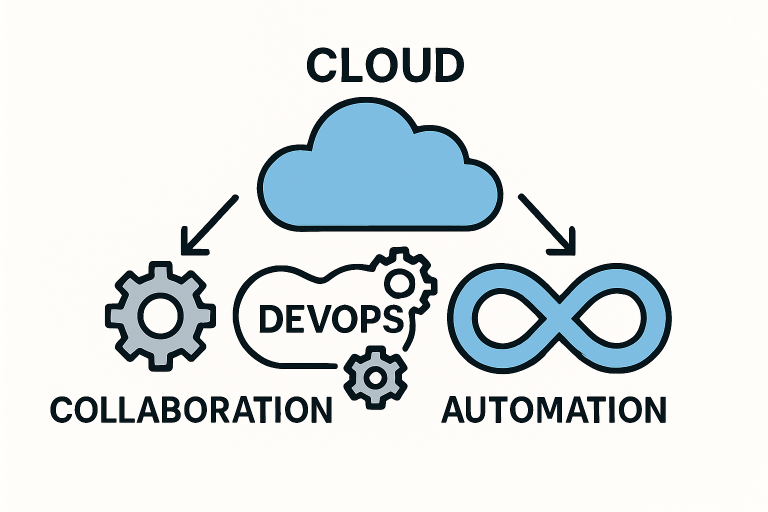
Benefits of Cloud DevOps
- Increased Agility: Cloud DevOps enables organizations to adapt quickly to market and customer demands, allowing teams to pivot strategies and deliver features more efficiently.
- Enhanced Collaboration: Bridging the gap between development and operations streamlines communication, speeds feedback, and reduces bottlenecks.
- Improved Quality: Automated testing and monitoring in CI/CD pipelines yield more robust, bug-free releases.
- Cost Efficiency: Automation reduces reliance on manual intervention, leading to significant cost savings and freeing up resources for innovation.
Integrating AI and Machine Learning
Artificial intelligence and machine learning are rapidly transforming DevOps workflows. Automated AI-driven tools can forecast potential deployment issues, optimize resource allocation, and enable predictive monitoring for proactive problem resolution. By leveraging machine learning algorithms, teams can design self-healing systems, detect anomalies earlier in the development cycle, and deploy with greater confidence.
Major cloud providers now offer advanced AI-powered DevOps tools that accelerate automation and improve system reliability. These innovations not only minimize human error but also drive continuous learning and improvement throughout the software lifecycle.
Case Studies and Real-World Applications
Numerous businesses have reported impressive gains from embracing cloud DevOps. For instance, CloudBees, a global software development platform, achieved over $150 million in annual recurring revenue with improved product velocity by adopting DevOps practices. This transition was highlighted by the launch of advanced SaaS DevSecOps features, further underscoring how integrating cloud and DevOps principles drives profitability and growth.
These case studies highlight that, regardless of industry or scale, organizations benefit from greater operational resilience, transparent processes, and the flexibility to innovate quickly than competitors.
Challenges and Considerations
- Skill Gaps: Cloud DevOps requires upskilling teams in both cloud technologies and advanced automation, making ongoing training a necessity.
- Security Concerns: As more operations move to the cloud, robust security frameworks, identity management, and compliance become increasingly critical.
- Tool Integration: Choosing and harmonizing the right toolkit for collaboration, monitoring, and automation ensures a seamless workflow and unified vision.
Future Trends in Cloud DevOps
- Hybrid and Multi-Cloud Strategies: An increasing number of enterprises are choosing hybrid and multi-cloud deployments to diversify capabilities and avoid vendor lock-in, enabling them to leverage the strengths of multiple platforms.
- Serverless Computing: With the rise of serverless architectures, development teams can focus solely on code and business logic, enabling even faster iteration and greater cost savings.
- Enhanced Security Practices: As cloud-native adoption grows, embedding security deeply into the DevOps lifecycle is a top priority, resulting in more secure pipelines and resilient systems.
Conclusion
Cloud DevOps is redefining how companies build, test, and deploy software in the modern era. By merging cloud scalability with the collaborative ethos of DevOps, organizations can accelerate innovation, bolster operational agility, and reinforce security. While navigating cultural, technical, and process-based challenges remains paramount, the trajectory of cloud DevOps points to a future characterized by continuous improvement and unparalleled digital capability.