




As the colder months approach, many vehicle owners face the challenge of storing their cars safely through winter. Proper preparation not only protects your car from harsh conditions but also ensures it remains in good working order when it’s time to hit the road again. Winter storage involves more than just parking the car in a garage; it requires a series of steps to maintain the engine, battery, fluids, and tires. Neglecting these precautions can lead to costly repairs and shorten your vehicle’s lifespan. By taking the time to prepare your car for winter storage, you can minimize the risk of moisture-related damage, freezing, and prolonged inactivity.
One important aspect to consider during this period is winter storage coverage for your vehicle. This type of coverage helps protect your car against potential damage while it is not in use, providing peace of mind during the months it remains idle. Combining careful physical preparation with proper coverage ensures that your vehicle stays protected, making the transition back to regular driving smoother and safer.
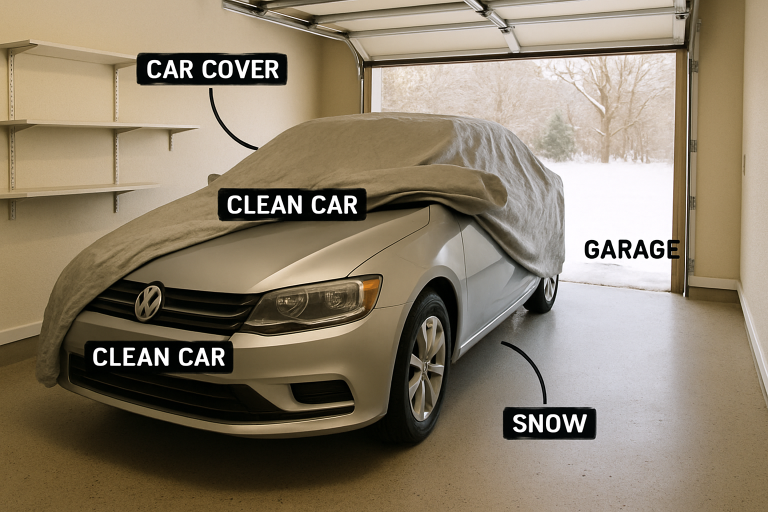
Table of Contents
Cleaning Your Vehicle
Start your winter storage routine by giving your car a thorough cleaning, both inside and out. Wash the exterior to remove dirt, salt, and road grime, which can accelerate rust during storage. Waxing your car adds a protective barrier to the paint. On the inside, remove all food wrappers, crumbs, and personal items, as any debris can attract pests or mold. Vacuum floors, upholstery, and the trunk, and wipe down all surfaces.
For leather interiors, consider applying a conditioner to prevent cracking over the dry winter months. Cleaning your vehicle before storage not only maintains its appearance but also helps prevent corrosion and costly repairs once the weather warms up.
Maintaining Fluids and Fuel
Topping up all essential fluids is a cornerstone of proper winter storage. Make sure to check the oil, coolant, brake fluid, and windshield washer fluid. If your car is due for an oil change, have it done before storage to avoid contaminants sitting in the engine for an extended period. Moisture can cause corrosion inside the block, and fresh oil helps prevent this.
Fill the gas tank completely to minimize the chance of condensation inside the tank, which can lead to rust and fuel system issues. Add a quality fuel stabilizer to prevent the gasoline from deteriorating over time and running poorly when you start the car up again. This simple step alone can save you from costly fuel system repairs down the line.
Battery Maintenance
Car batteries can lose their charge during periods of inactivity, especially in cold environments. Disconnect the battery and store it in a cool, dry place if your car will be static for a few months. If storage is in an unheated garage, it’s wise to use a trickle charger or battery maintainer to keep the battery charged and ready for use in spring. This proactive step not only preserves your battery’s lifespan but also prevents the frustrating experience of a dead battery after months of inactivity.
Regular battery maintenance helps prevent sulfation, a common cause of battery failure in vehicles left untouched for long periods.
Tire Care
To minimize the risk of flat spots, inflate your tires to the manufacturer’s recommended pressure. If you have jack stands, elevating the car will relieve pressure entirely and extend tire life. Alternatively, move your vehicle slightly every few weeks to shift the weight on the tires and further prevent deformation. For specialty or high-value vehicles, removing and storing tires separately can add further protection.
Proper tire care ensures safer driving and prevents the need for premature tire replacement after storage.
Choosing a Storage Location
Selecting the right environment for winter storage helps safeguard your investment. The ideal spot is a dry, secure, and well-ventilated garage. If you lack garage space, dedicated vehicle storage facilities are available in most cities. Look for a space that is shielded from the elements and protected from moisture, a key cause of rust and mold. If indoor storage is not possible, choose a level surface and use a quality car cover.
Ensure your storage area is free of clutter and well-protected from rodents and pests. Storing your vehicle in the right location prevents avoidable damage, keeps paint in great condition, and protects the interior from mildew and fading.
Covering Your Vehicle
A high-quality, breathable car cover is vital for long-term storage, as it protects your car from dust, moisture, and accidental scratches. Avoid plastic tarps or covers that can trap condensation, which can lead to mold and potentially harm your paint job. Invest in a cover designed specifically for your vehicle model to ensure a snug, secure fit and adequate airflow.
Secure your cover, especially if the vehicle is stored outdoors, to prevent wind from blowing it off or causing it to flap and scratch the paint. A well-fitted, breathable cover is your last line of defense during long winter months.
Additional Tips
- Place moisture-absorbing packs, such as silica gel, in the car and the trunk to help mitigate mold and mildew.
- Seal exhaust pipes and air intakes with steel wool or rubber plugs to deter rodents and pests.
- Release the parking brake and secure the car with wheel chocks. This prevents the brake pads from sticking to the rotors, reducing the risk of damage when the vehicle is returned to service.
- Check your insurance policy to ensure your vehicle is protected while in storage, and consider specialized coverage for stored vehicles if necessary.
Conclusion
Carefully preparing your car for winter storage protects your investment, prevents deterioration, and ensures an easy return to the road in spring. Prioritize thorough cleaning, routine fluid maintenance, proper battery and tire care, securing a safe storage location, and using a protective car cover. With a few proactive steps now, you can avoid unnecessary repairs, added expense, and stress later. Proper storage now results in a car that’s as road-ready and reliable as the day you put it away.