




It’s easy to assume that successful people are perpetual winners—that they move from challenge to challenge and come out on top every time. However, the truth is that many of the most successful people have failed just as much as they have succeeded. We forget this truth because we tend to focus on the end result and not the many setbacks these individuals overcame on their journey to the top.
For example, when Walt Disney was starting out as a young cartoonist, one editor told him he had no imagination. Later, he was fired from Universal Studios for refusing to accept a lower wage. When he left Universal, he had to leave a cartoon rabbit he’d created behind, as he did not own the rights to the character. Vowing never to create another character he couldn’t claim as his own, Disney began building the company that would make his name synonymous with fantasy and family entertainment.
Oprah’s empathy – her downfall and rise
A young Oprah Winfrey got fired from her job as an evening news reporter when her bosses thought she was too emotionally invested in the stories and the people she covered. Winfrey went on to develop one of the most successful careers in broadcasting, based in large part on her ability to get to the emotional heart of a story.
James Dyson’s failures ignited his success
Sir James Dyson had to go through more than 5,000 unsuccessful prototypes over 15 years before developing the invention that would make him a billionaire: the Dyson bagless vacuum cleaner. Dyson used the insights he gained from those 5,000 attempts to build out the cyclone technology that is now at the center of his engineering empire.
Accepting and learning from mistakes
As Winfrey put it, mistakes and failures are simply the way life works to “move us in another direction.” Dyson has said that it’s only through the trial and error of mistakes, just like a child’s process of discovery, that we learn to progress. And as Disney said, “a kick in the teeth” just might turn out to be “the best thing in the world for you.”
Alongside these famous success stories, you could put millions more, of all the men and women throughout history who got a “kick in the teeth” but stuck with it, pushed through, and achieved their goals. Trace their path to success and you’ll likely see a common thread: They learned to learn from their mistakes.
The late Brian Klemmer believed in the power of learning from your mistakes, and so does his namesake company.
Klemmer and Associates experiential trainings are designed to use mistakes as a launching pad for learning more about yourself, confronting the useless negative beliefs that hold you back, and stepping up to become accountable for your own future. By doing so, you’ll find what Disney, Winfrey, Dyson, and numerous others have found: It’s not the fact that we as humans make mistakes; it’s what we do with those mistakes that defines us.
Far from knocking you out of the game, mistakes give you the potential to gain insights other players don’t have—as long as you pay attention to them. The desire to learn, grow, and persist on the path of self-improvement is a positive trait, and a rare one at that. You’ll also find that a determination to learn from your mistakes will increase the trust that colleagues, employees, and loved ones feel for you.
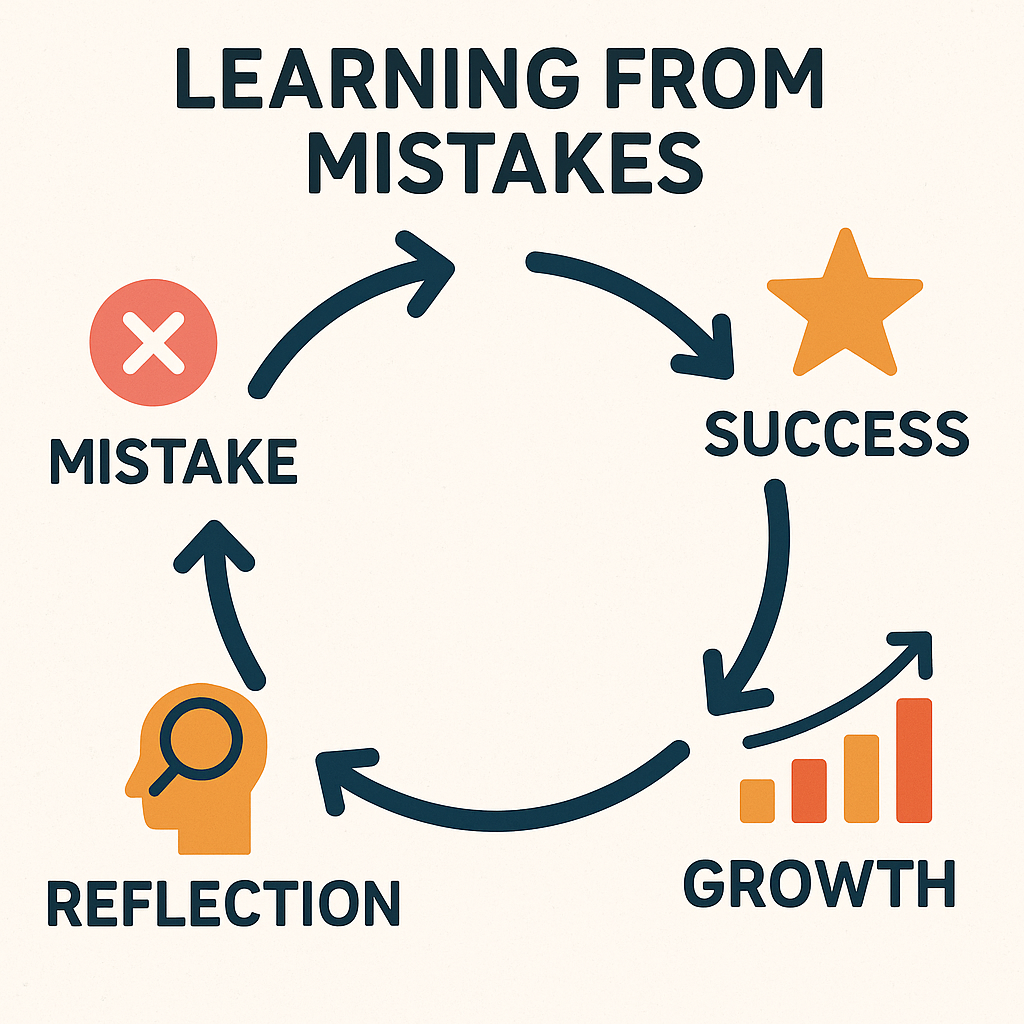
So, how do you do it?
To truly learn from your mistakes, keep the following in mind:
First, you’ve just got to acknowledge them. Make any amends necessary, take responsibility, and walk the walk needed to move forward constructively.
Avoid casting blame on others. The point is not to find fault; instead, focus on finding solutions. Within organizations, blame-casting can be corrosive. It can lead to a culture of finger-pointing, rather than continuous improvement.
Evaluate the results of your mistakes. Doing this—rather than trying to explain mistakes away—isn’t about shame, it’s about shaping your future for the better. It keeps you accountable to your commitments, to yourself, and to those who look to you for leadership.
Acknowledging, then examining, your mistakes and failures provides the fertile ground for learning, growth, and ultimately success. This path also helps us build the resilience we need to keep moving forward with a positive attitude.
You may want to keep a journal of your mistakes and the new ways forward you’ve found based on your analysis of them. Reflect on how your mistakes have helped you establish better work patterns, clear away logjams, and refine your strategies.
Reach out to others for insights and advice. Discuss your mistakes frankly with trusted associates and ask for their honest feedback. Don’t be surprised if they seek you out for advice on their mistakes as well. Everyone will benefit from these constructive exchanges.
Banish perfectionism. Trying to be “perfect” in everything you do is a sure road to disaster. That mindset will keep you tied up in mental and emotional knots, afraid to make a move for fear of making a mistake.
Trying to do everything perfectly the first time is an impossible goal. Instead, move forward with the certainty that there will be some mistakes, struggles, and failures ahead of you. Rather than letting this knowledge freeze you, allow it to free you.
Be ready to do your best with the knowledge you have, even while you embrace your mistakes, own them, reflect on them, and use them as building blocks to help you construct an even bigger and better version of your original plan.