




Storing firewood correctly is crucial to keeping it dry, safe, and ready for use throughout the year. Not only does proper storage maximize burning efficiency, but it also protects your investment in firewood and prevents common issues such as rot and infestation. Many homeowners also look for sustainable practices to maintain a healthy landscape. Incorporating mulch around your property can complement your firewood storage efforts by improving soil health and reducing weeds, ultimately supporting the environment around your woodpile.
If you rely on firewood for heating, ambiance, or outdoor fire pits, practical storage solutions become especially important during wet or cold seasons. Selecting the right location, stacking technique, and shelter are all key parts of an effective approach. Although it may seem simple to pile up logs, following specific guidelines ensures your firewood is always ready when you need it.
Along with the convenience of having dry firewood, good storage practices can actually extend its usable life and improve your home’s safety. Taking these precautions greatly reduces the risk of accidental fires, unwanted pests, and wasted resources.
Table of Contents
- 1 Choose an Appropriate Storage Location
- 2 Elevate Your Firewood Off the Ground
- 3
- 4 Stack Firewood Properly for Stability and Airflow
- 5 Cover the Top, Leave the Sides Open
- 6 Keep Firewood Away from Trees and Shrubs
- 7 Allow Enough Time for Seasoning
- 8 Inspect for Pests and Mold Regularly
- 9 Consider a Firewood Shed for Added Protection
- 10 Final Thoughts
Choose an Appropriate Storage Location
The first step to successful firewood storage is selecting a proper location. Experts recommend keeping your firewood at least 20 feet from your home or any outbuildings. This distance helps deter insects, such as termites and carpenter ants, from migrating from your woodpile into your living spaces, and it reduces the risk of accidental fires. Keeping your stack farther from your home also provides a buffer against rodents who may seek warmth and shelter.
Placing your firewood in an area that receives ample sunlight further assists with drying and discourages moisture accumulation. Avoid shaded spots where dampness lingers, as they increase the likelihood of rot and inhibit effective seasoning.
Elevate Your Firewood Off the Ground
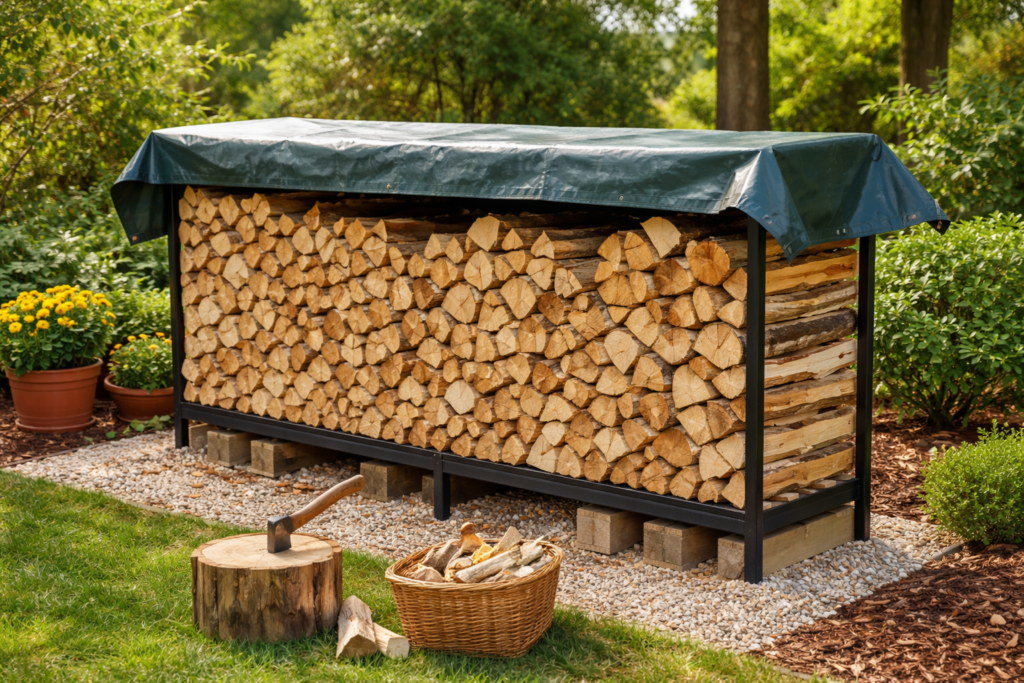
Firewood should always be stacked on a raised surface. Leaving logs directly on the ground exposes them to ground moisture, which encourages mold, decay, and pest attraction. Use purpose-built firewood racks, wooden pallets, or even cinder blocks to lift your stack several inches above the soil.
Elevation allows air to circulate beneath the pile, accelerating drying and preventing premature rotting of the bottom layer. According to the U.S. Environmental Protection Agency, proper elevation is among the most critical factors for safely and efficiently storing wood.
Stack Firewood Properly for Stability and Airflow
The arrangement of your firewood directly affects airflow and stack stability. To ensure both, stack logs in a crisscross or “log-cabin” pattern at the ends, then fill the center with straight rows. This method keeps stacks upright, reduces the risk of collapse, and maximizes airflow through the pile.
Avoid stacking firewood too high. Most experts recommend a maximum height of about four feet to ensure safety. Always build your piles so that the base is wider than the top and so there is some space between the logs for ventilation.
Cover the Top, Leave the Sides Open
Protecting your firewood from precipitation is essential. However, fully wrapping the stack traps moisture and restricts drying. Instead, cover only the top portion of your firewood pile with a waterproof tarp, heavy-duty plastic, or metal sheeting. Leaving the sides open enables airflow, which is necessary to drive off moisture and promote seasoning.
Ensure your cover is secured but still allows wind to move beneath the tarp. This method keeps rain and snow off the wood while preventing moisture from collecting within the stack.
Keep Firewood Away from Trees and Shrubs
Piles of firewood placed too close to vegetation are at a higher risk for moisture retention, pest infestation, and disease transmission. Overhanging branches can drip water onto your wood, and dense shrubs can trap humidity. For best results, select an open area that receives sun and allows air to pass freely around the stack.
Keeping your firewood away from trees and bushes is also a smart way to protect the vegetation. Insects and fungi that accumulate in woodpiles can quickly spread to otherwise healthy landscape plants.
Allow Enough Time for Seasoning
“Green” firewood contains 50 percent or more water when freshly cut. Properly seasoned wood should be left to dry for at least 6 to 12 months. Hardwood varieties such as oak may require up to two years, while softwoods like pine season more quickly.
Make sure your stack is exposed to wind and sun to speed up seasoning. Burning unseasoned wood leads to inefficient fires, excess smoke, and hazardous creosote accumulation in chimneys, according to the U.S. Environmental Protection Agency.
Inspect for Pests and Mold Regularly
Regular inspections prevent issues from becoming serious. Check your woodpile every few weeks for signs of insect activity, rodent nests, or fungal growth. Remove any infested or moldy logs from your stack immediately, and clean the area around the base of the pile.
Maintaining a tidy firewood area further discourages pest problems and keeps your supply in optimal condition.
Consider a Firewood Shed for Added Protection
For homeowners who burn wood often, a dedicated firewood shed can significantly improve long-term storage. Ideally, sheds should have a sloped, waterproof roof and open sides to permit airflow. Placing your shed in a sunny area and elevating it off the ground maximizes drying and protects your firewood from all weather conditions.
Investing in a firewood shed is also an effective way to keep your yard organized and to increase the efficiency and safety of your firewood use over time.
Final Thoughts
Proper firewood storage is the foundation for efficient, safe, and convenient wood-burning. By carefully selecting the site, stacking method, and maintenance routine, you can safeguard your firewood supply from moisture, pests, and decay. These proven methods also promote sustainability in your yard and home, creating a healthier environment for both firewood and landscape. By following these best practices, you ensure your wood will be ready to provide warmth and enjoyment in any season.