




The ocean doesn’t care about your experience level. When heavy weather hits, even the most seasoned deck crew must rely on advanced skills and split-second decision-making to keep themselves and their vessel safe. Understanding how to operate effectively in severe conditions separates competent mariners from exceptional ones.
Reading the Signs Before the Storm
Experienced deck crew know that preparation begins long before the first whitecap breaks over the bow. Modern weather routing systems provide detailed forecasts, but nothing replaces the ability to read atmospheric conditions firsthand. Changes in barometric pressure, unusual cloud formations, and shifts in sea state all tell a story. Smart crews use this information to secure loose equipment, double-check lashing systems, and mentally prepare for what’s coming.
The transition period before heavy weather arrives is critical. This is when deck crew should inspect all securing arrangements, test emergency equipment, and ensure drainage systems are clear. Water on deck becomes a serious hazard quickly, and blocked scuppers can lead to dangerous situations. Taking extra time to verify that hatches are properly dogged and ventilators are secured can prevent catastrophic flooding below decks.
Advanced Securing Techniques
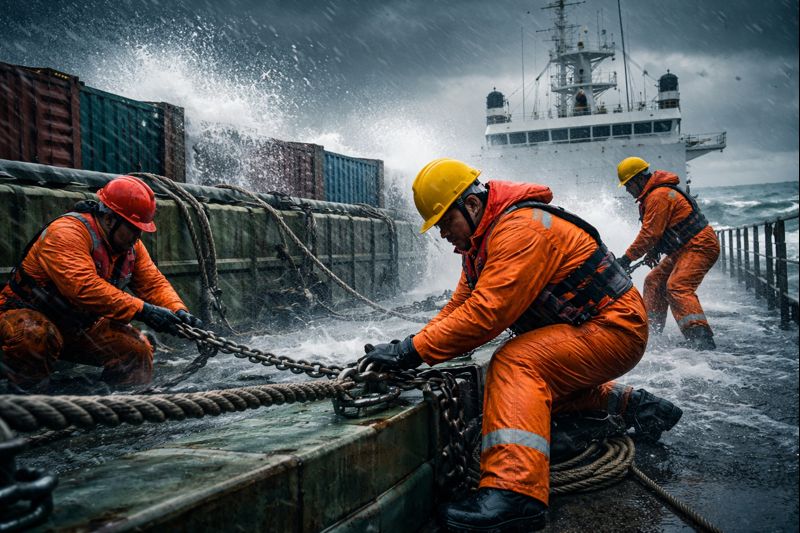
Standard lashing procedures work fine in moderate conditions, but heavy weather demands more sophisticated approaches. Experienced crew understand load distribution and how to account for the dynamic forces created by a vessel’s movement in severe seas. This means using additional securing points, employing different types of lashings for different equipment, and constantly reassessing as conditions change.
Container ships face particular challenges during heavy weather operations. The forces acting on stacked containers can be immense, and even small failures in securing systems can cascade into major problems. Deck crew must inspect twist locks, lashing bridges, and securing rods with particular attention. Many incidents that lead to cargo loss or personal injury could have been prevented with more thorough inspections and better securing practices. New Orleans Jones Act Attorney at Chopin Law are of the opinion that many maritime injury cases stem from inadequate preparation for foreseeable weather conditions, making proper training and adherence to safety protocols essential for both crew welfare and legal protection.
Managing Deck Operations in Extreme Conditions
When heavy weather arrives, routine deck operations become hazardous undertakings. Simply moving from one part of the vessel to another requires careful planning. Experienced crew time their movements with the ship’s motion, using lifelines religiously and maintaining three points of contact whenever possible. They understand that shortcuts can be deadly and that no task is worth risking life or limb.
Working aloft or outboard during heavy weather should be avoided whenever possible, but sometimes it becomes necessary. In these situations, proper personal protective equipment and fall arrest systems are non-negotiable. Crew must also communicate constantly with the bridge and other team members, ensuring everyone knows who is where and what tasks are being performed.
Bridge Communication and Teamwork
Heavy weather operations demand exceptional communication between the deck crew and bridge team. Experienced mariners know how to provide clear, concise reports about conditions on deck, equipment status, and any developing problems. They understand that the bridge team needs accurate information to make critical decisions about course, speed, and other operational factors.
The relationship between deck officers and able seamen becomes particularly important during severe weather. Officers must trust their crew to execute orders safely and report problems immediately. Crew members must feel comfortable raising concerns without fear of reprisal. This culture of open communication can mean the difference between safely weathering a storm and facing a serious casualty.
Physical and Mental Preparation
Heavy weather operations are physically exhausting and mentally demanding. Experienced crew pace themselves, knowing that storms can last for days. They stay hydrated, eat when possible, and grab rest during lulls. Mental preparation is equally important. Maintaining focus while fatigued, wet, cold, and being thrown around by the vessel’s motion requires exceptional discipline.
Understanding personal limits is crucial. There’s no shame in asking for relief when fatigue sets in or when conditions exceed your comfort level. The best deck crew know that recognizing when you need help is a sign of professionalism, not weakness.
Learning from Every Experience
Each heavy weather encounter provides valuable lessons. Experienced crew take time after the storm to reflect on what worked well and what could be improved. They discuss near-misses openly, identifying factors that contributed to dangerous situations and developing strategies to avoid similar problems in the future.
This continuous learning approach helps build institutional knowledge within the crew. Newer members benefit from hearing about challenges faced by veterans, and everyone gains from honest assessment of operations. Documenting lessons learned and incorporating them into training programs ensures that hard-won knowledge isn’t lost when experienced crew members move on.
Heavy weather operations remain one of the most challenging aspects of maritime work. Advanced skills, thorough preparation, and unwavering attention to safety protocols enable experienced deck crew to navigate these dangerous situations successfully. By combining technical knowledge with practical wisdom gained through experience, professional mariners continue upholding the traditions of seamanship that have kept vessels and crew safe for generations.