




Starting a child care or early learning center is a significant endeavor that impacts both your community and the children you serve. The process demands thorough planning, a clear understanding of regulations, and a heartfelt dedication to creating safe and enriching environments. For those interested in established models, child care franchise opportunities provide a launching point with proven systems and brand support while enabling local entrepreneurs to meet community needs.
While aspiring providers are drawn to the rewarding mission of nurturing young minds, they quickly discover the terrain is intricate. New centers must analyze local market needs, budget with precision, and build foundations rooted in educational best practices. By taking care with each step, you can ensure your center thrives as a trusted resource for families.
Market trends and evolving regulations shape this rapidly growing sector, requiring national awareness and local adaptation. Understanding everything from the competitive landscape to long-term financial sustainability ensures your venture stands out.
Table of Contents
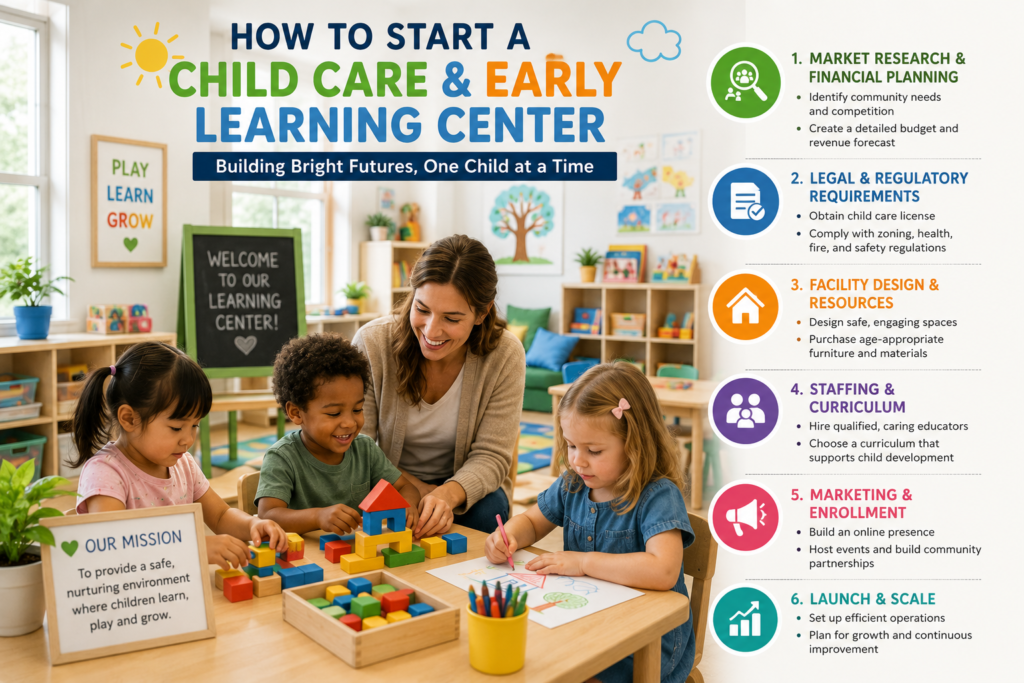
Market Research and Financial Planning
Identifying unmet community needs is crucial to establishing a successful center. This involves analyzing the pricing, programs, and enrollment of local child care facilities. Areas lacking language immersion or STEM programming present opportunities to differentiate services. Collect insights through surveys and interviews with parents. Financial planning is critical, as startup expenses range from $60,000 to $180,000 and cover leasing, permits, marketing, and reserves. Establish revenue forecasts by determining fair tuition rates and estimating maximum capacity to ensure cost coverage and support growth.
Compliance with child care licensing laws is mandatory and complex. Most states require centers to work with multiple authorities, including zoning, health, and fire departments. In states like Georgia, prospective providers must navigate as many as nine different agencies during the startup phase. These procedures help protect children and reassure parents but demand patience and close attention to detail. Regulatory changes are frequent, so staying informed about proposed updates is vital for ongoing compliance and high educational standards.
Facility Design and Resource Procurement
An ideal facility balances security, accessibility, and stimulation. Create distinct play and learning areas based on age, all visible for supervision. Install sanitation stations and secure entrances with check-in protocols for families. Outdoor zones should include sensory-rich elements like gardens, sand pits, and shaded seating to promote discovery and activity.
Procure durable, safe, and developmentally appropriate furnishings and materials. Use hypoallergenic cleaning products, secure storage, and barrier-free layouts for easy movement. Thoughtful design not only meets guidelines but also enhances each child’s learning experience.
Staffing and Curriculum Development
Quality staffing is crucial for the growth and reputation of your center. Hire educators with accredited backgrounds in early childhood education. Interpersonal skills, such as communication, empathy, and flexibility, are equally important. Retain top talent with attractive wages, training resources, and opportunities for advancement.
Choose a curriculum that aligns with your educational philosophy and community expectations. Widely adopted options include Creative Curriculum, which emphasizes project-based learning and ties to national school-readiness standards. The HighScope and Reggio Emilia approaches offer alternative, child-centered methodologies that may set your center apart. Carefully review curriculum requirements to ensure state alignment and measurable developmental outcomes.
Marketing and Enrollment Strategies
Build visibility and trust through an effective digital marketing strategy. Launch a mobile-friendly website, engage with parents on social media, and optimize your web presence for local search terms such as “quality preschool in [City].” Regularly share success stories, staff profiles, and event announcements to connect with families.
Host open house events, community fairs, and workshops to welcome prospective families. These events allow parents to ask questions, meet educators, and observe the daily routine. Establish referral partnerships with area pediatricians, businesses, and real estate agents to reach relocating families or new parents seeking recommendations.
Operational Launch and Scaling
The opening phase of establishing a child care or early learning center focuses on implementing efficient systems and fostering a supportive culture. Utilize management software for tasks like recordkeeping and communication, and conduct regular reviews to improve operations. Once fully operational, consider expansion and stay informed about state grants, such as those in Washington, that aim to enhance child care quality. Success in this sector requires substantial investment, adaptability, and adherence to best practices in various areas to create a lasting community institution.
Conclusion
A successful child care or early learning center is built on careful planning, regulatory compliance, high-quality staffing, and a strong commitment to meeting families’ needs. From conducting thorough market research and securing the right facility to developing an engaging curriculum and implementing effective enrollment strategies, every step plays a vital role in long-term success. By combining sound financial management with a nurturing learning environment and efficient operations, providers can create a trusted space where children thrive. With dedication, adaptability, and a focus on continuous improvement, an early learning center can become a valuable community resource that supports children’s development and serves families for years to come.