



Table of Contents
Introduction
Increasingly, architects, builders, and developers are turning to innovative solutions to optimize both time and budget on construction projects. Among these, prefabricated wood roof trusses have become a foundational choice for efficiency-driven construction sites. These components, engineered and assembled off-site, arrive ready to streamline roof assembly, leading to remarkable economic and practical advantages. For those involved in residential or commercial builds, harnessing wood roof trusses California can significantly enhance project efficiency while reducing costs.
As demand for sustainable, cost-effective construction rises, prefabrication stands out for enabling more stringent resource management and precise manufacturing. By offering consistency, reduced material usage, and rapid deployment, prefabricated trusses bridge the gap between modern construction needs and traditional craftsmanship.
Reduced Material Waste
One of the most immediate benefits of using prefabricated trusses is the significant reduction in material waste. In traditional on-site construction, lumber is often cut to fit during framing, leading to leftover pieces and inefficiencies. Prefabrication, on the other hand, takes place in technologically advanced factories where precise engineering minimizes offcuts. Automated saws and design software calculate exact measurements for each truss, ensuring every inch of lumber is used to its fullest potential.
This efficiency translates into lower disposal fees and less waste sent to landfills, benefiting not only your bottom line but also the environment. According to the U.S. Environmental Protection Agency, construction and demolition activities account for a significant share of landfill waste each year, making any step toward reduction crucial for sustainable building practices.
Lower Labor Costs
With material waste minimized, the next clear advantage is a drop in labor costs. Prefabricated roof trusses are delivered ready to install. Unlike traditional hand-framed roofing methods, which require skilled on-site labor for days or even weeks, prefabricated trusses can be easily set in place by a smaller crew in a fraction of the time. This reduction in skilled labor needs results in significant payroll savings, particularly on projects that require multiple or complex roof structures.
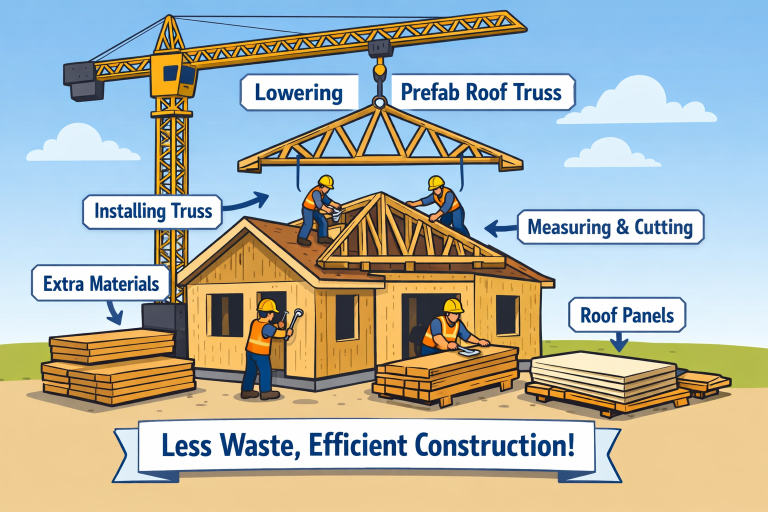
Shortening the installation period also reduces the likelihood of costly delays caused by weather or material shortages, which often affect site-built roof assemblies. The streamlined workflow delivered by prefabricated systems keeps labor budgets on track from start to finish.
Faster Construction Timelines
In an industry where time is money, speeding up construction schedules can make a significant difference for both builders and clients. The use of prefabricated roof trusses does just that, enabling multiple project elements to progress simultaneously. While trusses are manufactured off-site, on-site foundational and wall work can continue without disruption. As soon as a site is ready, trusses can be installed quickly, often within a single day for average-sized homes.
This parallel processing allows entire builds to move forward efficiently, reduces construction financing costs, and speeds up returns for property investors.
Enhanced Quality Control
Factory-built trusses offer higher standards of quality control versus site-built alternatives. Factors such as fluctuating weather, inconsistent craftsmanship, and rushed timelines can lead to imperfections when framing roofs on-site. Prefabricated truss facilities use advanced quality assurance checks, ensuring each truss meets strict engineering and safety standards before it ever leaves the factory floor.
This attention to detail reduces the possibility of structural issues or alignment discrepancies down the line. By catching and correcting errors before shipment, prefabricated truss providers reduce the risk of expensive on-site corrections and warranty work later.
Design Flexibility
Prefabricated wood trusses are not limited to basic roof shapes. Through modern design software and engineering expertise, manufacturers can accommodate a wide variety of roof styles and architectural aesthetics. Whether your project demands a steep gable, a vaulted ceiling, or unique load-bearing requirements, prefabricated trusses can be custom-designed to handle virtually any configuration while maintaining structural integrity.
This flexibility supports the growing demand for personalized home designs and complex commercial projects, ensuring cost savings do not come at the expense of visual appeal or durability.
Environmental Benefits
In addition to economic gains, prefabricated roof trusses offer notable environmental benefits. Manufacturing in a controlled setting generates lower greenhouse gas emissions and energy use than traditional, labor-intensive site construction. Furthermore, optimized lumber usage means fewer trees harvested for the same square footage of construction, directly supporting sustainable forestry practices.
Sustainable construction solutions, such as prefabrication, are increasingly important as climate considerations shape building codes and buyer preferences. Adopting resource-efficient building products is a proactive way for builders and developers to reduce their environmental footprint while supporting community and industry goals.
Final Thoughts
Prefabricated wood roof trusses have proven to be a critical ally in reducing costs and improving construction efficiency. The combined advantages of reduced material waste, lower labor costs, and faster build times make a compelling case for their widespread adoption. Enhanced quality control and unmatched design flexibility provide further assurance to builders seeking long-lasting, customized results. As the industry continues to evolve, those who incorporate prefabricated solutions can expect greater profitability and a reduced ecological impact, making them a wise choice for any forward-thinking construction project.