




Lighting is often overlooked in office design, yet it has a significant impact on employee productivity, comfort, and well-being. The right lighting not only helps employees see better and perform tasks efficiently, but it also positively affects their mood and energy levels throughout the workday. Companies striving to enhance productivity should evaluate their lighting strategies holistically. To assess how your workspace can benefit from professional lighting design, schedule with the Workscape Designs team for an expert consultation.
Appropriate lighting can mitigate eye strain, reduce headaches, and boost job satisfaction. Modern office planning prioritizes both natural and artificial illumination, recognizing its impact on the overall atmosphere and worker health. By leveraging advancements in lighting technology and strategic design, businesses can foster a more energizing and effective work setting for their teams.
Table of Contents
Understanding the Impact of Lighting on Productivity
Our bodies are highly sensitive to light, which regulates circadian rhythms that control sleep-wake cycles and alertness. Exposure to natural or optimally tuned artificial lighting at the right times enhances focus, reduces fatigue, and ultimately drives better work outcomes. Conversely, workspaces with poor lighting often experience increased absenteeism, lower morale, and diminished productivity, due to common symptoms such as eye fatigue and a lack of motivation.
Scientific research highlights the critical connection between workplace lighting and cognitive performance. According to the Harvard Health Blog, exposure to bright, blue-enriched light during the day can improve alertness and mental clarity, setting the tone for effective work sessions.
Maximizing Natural Light
Natural light is the gold standard for office environments, promoting not only productivity but also overall wellness. Architectural features such as expansive windows, skylights, and open-plan layouts help maximize daylight exposure. Employees with ample access to sunlight report better moods, higher job satisfaction, and improved sleep quality. These benefits spill over into tangible business results, including enhanced engagement and lower turnover rates.
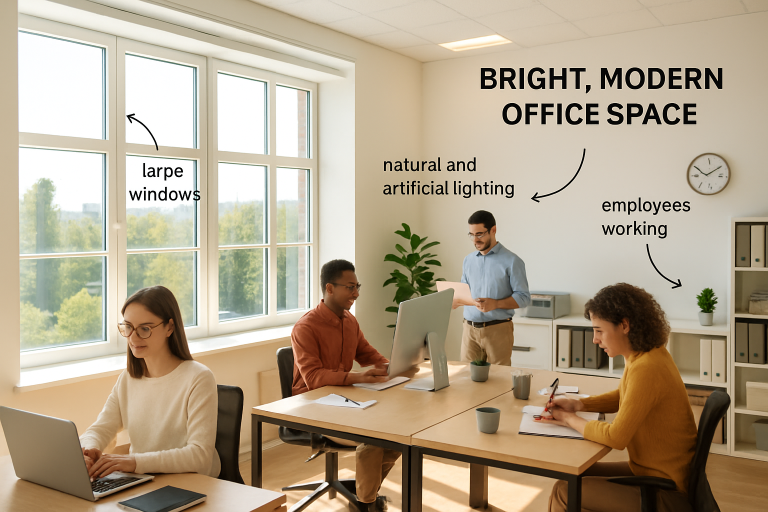
Employers should consider how to position workstations, meeting rooms, and collaborative zones to maximize daylight exposure. When natural light is limited, integrating reflective surfaces and glass partitions can help distribute available light more evenly throughout the workspace.
Implementing Human-Centric Lighting
Human-centric lighting (HCL) systems are designed to mimic the natural patterns of daylight, boosting employee well-being by aligning artificial illumination with circadian biology. By dynamically adjusting light color temperature and brightness throughout the day, these systems can help keep workers energized in the morning and encourage relaxation as the day winds down. Incorporating HCL strategies is a forward-thinking approach that nurtures long-term productivity and health.
For example, cool-toned, bright lighting in the morning can stimulate alertness, while softer, warmer tones in the afternoon and evening promote calm and signal the approach of the end of the workday.
Utilizing Task Lighting
General ambient lighting is not always sufficient for every office activity. Task lighting provides adjustable, focused illumination for specific needs, such as reading documents or working on detailed projects. Adjustable desk lamps, under-cabinet LED strips, or flexible floor lamps empower employees to personalize their lighting environments and accommodate individual preferences, reducing eye strain and enhancing accuracy during concentrated work sessions.
Incorporating Smart Lighting Solutions
Smart lighting systems are transforming modern workspaces. These technologies allow for automated, app-based, or sensor-controlled adjustments that adapt to occupancy, daylight availability, and daily schedules. Features such as motion-sensing lights and programmable scenes make it easy to create energy-efficient, flexible work environments that can shift between collaborative sessions and focused individual work. Smart lighting also supports sustainability goals and reduces operational costs by optimizing energy consumption.
Considering Color Temperature and Intensity
The color temperature and intensity of light can profoundly affect mood, alertness, and performance. Cool blue-white light (around 5000 Kelvin) is ideal for tasks that require sustained attention and accuracy, making it suitable for areas like meeting rooms and individual workstations. In contrast, warmer light (around 3000 Kelvin), which feels more relaxed and cozy, is better suited for collaborative zones and break areas where comfort and informal interaction are priorities.
Employers should carefully analyze workspace functions and select lighting tones and intensities that foster the desired behaviors. The shift to LED technology makes this easier, as modern LED fixtures offer adjustable color temperatures and brightness levels to tailor environments throughout the office.
Final Thoughts
Thoughtful lighting design is essential to cultivating a productive workspace. By maximizing natural light, integrating human-centric and task lighting, utilizing smart solutions, and prioritizing the right color temperature and intensity, organizations can create environments that promote well-being, engagement, and efficiency for everyone. Prioritizing proper lighting is not just an aesthetic choice, it is a strategic investment in people, performance, and long-term business success.