




Table of Contents
Introduction to Duty of Care
Every day, people and organizations are held to standards that aim to prevent harm and promote safety. This obligation is known as the duty of care, which describes the responsibility that each person has to act in ways that avoid causing foreseeable injuries or losses to others. The concept is especially significant because it underpins our interactions, decisions, and even business practices, ensuring communities operate smoothly and people remain protected. When these responsibilities are disregarded, the potential for accidents and conflicts rises dramatically. For anyone impacted by negligence, connecting with negligence injury attorneys can provide crucial assistance in understanding options for recourse and justice.
Duty of care is foundational in both personal interactions and professional environments. It requires each of us to think ahead and weigh how our behavior might affect others. Whether you’re a driver choosing to obey traffic laws, a business owner maintaining safety protocols, or a parent safeguarding a child’s play environment, this principle is always at play. It also holds significance in formal settings, guiding healthcare delivery, product design, and organizational management policies. A breach of duty of care can result in more than just legal repercussions; it can cause severe personal loss, emotional distress, and erosion of trust for those affected.
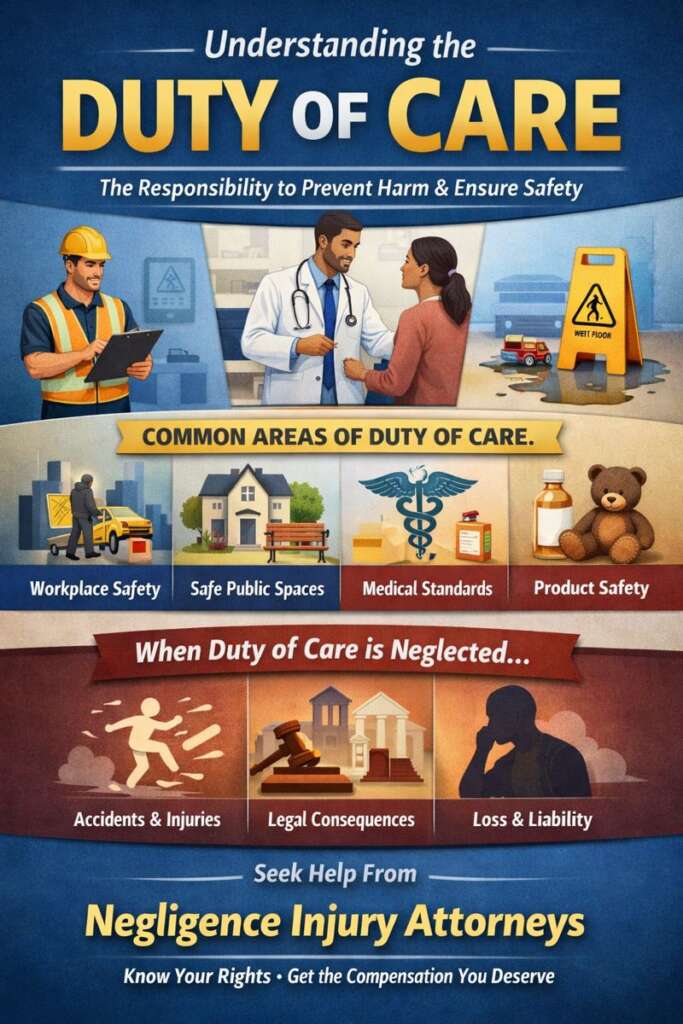
Common Scenarios Involving Duty of Care
1. Workplace Safety
The workplace is one of the most critical settings for understanding the duty of care. Employers are required to maintain environments free from unnecessary danger by providing sufficient training, keeping equipment in safe working order, and implementing protocols to address known hazards. For example, neglecting to provide protective gear or ignoring malfunctioning machinery can place employees at risk and expose employers to liability for any resulting injuries. The duty of care also extends to mental well-being, requiring managers to recognize psychological hazards and address issues such as harassment or overwork. Companies must ensure that their teams are not subject to avoidable hazards and that protocols are clear and enforced to safeguard everyone present.
2. Public Spaces and Premises Liability
Property owners of homes, stores, or other public spaces must take reasonable steps to safeguard their premises. Hazards such as icy walkways, poor lighting, or unrepaired structural issues can easily lead to accidents. If owners fail to address these issues promptly, they may be held legally responsible for any resulting injuries. For businesses like supermarkets, this responsibility might include promptly mopping up spills and blocking off dangerous areas. In many places, inviting someone onto your property implies a commitment that the premises are reasonably safe for visitors. This aspect of duty extends to both commercial and residential properties, and it promotes an environment where everyone can move about without unnecessary risk.
3. Medical Professionals
The expectations for medical professionals are rooted in the duty of care. Doctors, nurses, and other providers must adhere to established protocols and widely accepted practices to protect patients. From initial diagnosis to follow-up appointments and treatment plans, every step in a patient’s journey relies on healthcare staff exercising caution, attentiveness, and expertise. When practitioners deviate from these standards by misdiagnosing, prescribing the wrong medication, or performing unsuitable procedures, patients may suffer harm, which can lead to malpractice actions. Medical institutions also have an organizational duty to train staff thoroughly and ensure up-to-date practices are followed. Stories of medical errors highlight why these standards must remain stringent and consistent, according to the CDC.
4. Product Manufacturers
Manufacturers also have a significant duty of care. They must ensure that each product released to the market is safe for ordinary use. This means rigorous testing, careful oversight during production, and clear instructions or warnings for consumers. Defects in the design, manufacturing, or labeling of products can endanger users. For instance, children’s toys must be free from toxic substances and choking hazards, while electrical appliances should be certified for safety. When a faulty product causes injury, the company that made or sold it may be liable. This is why product recalls are a critical component of consumer safety; prompt action can prevent additional harm and show the importance of continuous testing and quality assurance.
Real-Life Examples of Breach of Duty of Care
Case Study: Negligence in Public Spaces
Consider a situation where a young gymnast is seriously injured at a training center. Investigations reveal that the facility failed to conduct adequate equipment checks and lacked qualified supervision for high-risk routines. These oversights, such as using worn-out mats or failing to repair broken apparatus, point directly to the organization’s failure to honor its duty of care. Legal action in this case led to a focus on how businesses can better protect users and minimize future incidents. The gym, in response, introduced ongoing staff training, regular safety audits, and more detailed incident-reporting systems. Incidents like this highlight why having qualified staff and maintaining safety measures are not optional but required, as reported by The New York Times.
Case Study: Medical Negligence
Another example involves a health provider who fails to follow standard diagnostic procedures, leading to a missed or incorrect diagnosis and subsequent patient harm. In one widely known case, a failure to order a critical test led to the worsening of a treatable illness, causing not only pain and suffering but also a prolonged recovery period and increased medical costs. This breach of established medical protocols causes not only undue suffering but also erodes public trust in healthcare professionals. Hospitals facing such claims often review protocols and invest in better staff training. When lives are at stake, overlooking standard care can have severe, wide-reaching effects on individuals and families alike. In such instances, transparency and accountability become critical for resolution and prevention.
Conclusion
Being aware of the duty of care in everyday life is crucial for personal well-being and societal trust. When individuals and organizations recognize their responsibilities and act with foresight, fewer accidents and cases of negligence occur. Whether in professional settings, public spaces, healthcare environments, or consumer products, understanding the duty of care enables everyone to take proactive steps to prevent harm and maintain a standard of safety. By holding ourselves and one another accountable, we build stronger, more resilient communities where justice, fairness, and compassion can flourish. Emphasizing these responsibilities fosters a culture of accountability and helps ensure justice when things go wrong.