



Proper abandonment of oil and gas wells is more critical than ever in the context of environmental stewardship and public health. When decommissioning wells, following industry best practices and responsible procedures ensures that no lingering hazards are left behind. Companies specializing in plug and abandon services play a pivotal role in securing well sites, sealing off potential leaks, and returning the surrounding environment to safe, usable conditions.
Abandoned wells, if improperly managed, are notorious sources of environmental contamination. Methane emissions, groundwater pollution, and hazardous surface leaks underscore the need for systematic well abandonment. Responsible techniques and ongoing innovation are driving the creation of a safer interaction between industrial activities and the natural world.
The oil and gas industry must address the growing issue of orphaned wells, particularly as stricter regulations and increasing public expectations emerge. Not only does proper decommissioning prevent environmental disasters, but it also helps restore trust between communities, regulators, and the energy sector.
Aligning with best practices for well abandonment helps mitigate decades-old problems stemming from insufficient oversight and outdated methods. As new technologies and regulatory approaches develop, understanding and applying proven abandonment procedures is more essential than ever.
Table of Contents
Understanding Well Abandonment
Well abandonment is the structured process of decommissioning oil and gas wells that are at the end of their productive life. A primary goal is to seal the wellbore completely—typically with cement and mechanical plugs—ensuring that no fluids or gases can escape to the surface or contaminate underground water sources. In parallel, responsible site abandonment calls for restorative measures, from re-grading soil to re-vegetating the land, so the site blends back into the natural environment.
Without these stringent processes, old and unused wells may become direct conduits for pollution, undermining both ecological health and the integrity of local communities. Growing public awareness and the mounting evidence of risks have brought this aspect of oil and gas operations under significant scrutiny by both regulators and environmental organizations.
Environmental Risks of Improper Abandonment
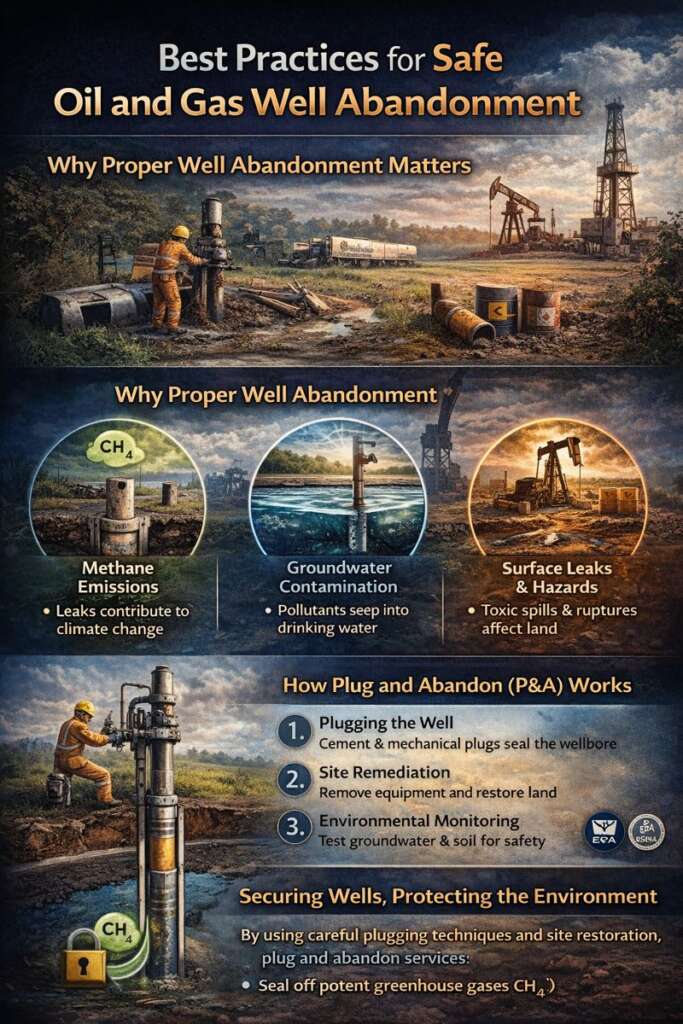
Improperly or partially abandoned wells are significant sources of environmental risk. Leaks at well sites can allow methane—a greenhouse gas over 25 times more potent than carbon dioxide—to escape unchecked into the atmosphere. These emissions are a quiet but powerful driver of climate change. Groundwater contamination is another concern, as harmful substances can migrate from abandoned wells into the drinking water supplies of rural and urban populations. The situation in Texas, highlighted by The Texas Tribune, illustrates the scale of the challenge, with thousands of unsupervised wells posing ongoing threats to both residents and the environment.
The dangers of inaction are exacerbated by the fact that these wells often change hands over the course of many decades, sometimes being left in a state of legal limbo as “orphan wells.” According to the U.S. Environmental Protection Agency, orphan wells are a nationwide concern and require coordinated state and federal responses for proper management.
Effective Well Abandonment Techniques
Industry best practices include a multi-step process that addresses both immediate hazards and long-term site recovery:
- Well Plugging and Sealing: Modern abandonment strategies begin with isolating all oil, gas, and water zones. This is followed by the installation of cement plugs and mechanical barriers within the wellbore to block fluid migration completely. The use of advanced diagnostics and leak-detection tools ensures a secure, permanent seal.
- Site Remediation and Reclamation: Abandonment doesn’t end at the Wellhead. Comprehensive projects entail restoring the surface landscape, removing remaining infrastructure, treating contaminated soils, and re-planting vegetation suited to the natural habitat.
- Environmental Monitoring: Long-term vigilance, including regular groundwater and soil sampling, ensures there are no lingering impacts after abandonment. Regulators often require monitoring and serve as a critical validation step for all abandonment projects.
These techniques are not only required by law but are also recognized internationally as essential for responsible resource management. Investing in these methods protects ecosystems and communities for decades to come.
Regulatory Framework and Compliance
Strict regulations govern the abandonment of oil and gas wells. In the U.S., agencies such as the Occupational Safety and Health Administration (OSHA) and state oil and gas commissions establish step-by-step requirements for safe decommissioning, ranging from initial notification and planning to detailed plug specifications and post-abandonment inspections. Operators who fail to comply face both substantial fines and reputational damage.
Compliance is not only a legal requirement—it’s an ethical one. Following guidelines ensures community safety, protects vital water resources, and maintains sustainability commitments in a sector under increasing scrutiny. Many international best practice frameworks align with U.S. rules, serving as benchmarks for responsible operators worldwide.
Future Directions in Well Abandonment
The field is evolving rapidly, driven by advancements in data science, remote sensing, and artificial intelligence. Recent breakthroughs, such as the Alberta Wells Dataset, which utilizes satellite imagery to identify and prioritize well sites for abandonment, show immense promise. This data-driven approach streamlines the detection of orphan wells, enabling the targeting of public and private resources where they’re needed most.
Ongoing research and collaboration across borders and industries continue to push the boundaries of safe, efficient, and environmentally responsible well abandonment. These advances signal a promising future where energy development and environmental conservation are not mutually exclusive, but rather integral to a more sustainable whole.