




Table of Contents
The Journey of a Discarded Mattress
Each year, millions of people buy a new mattress, but what exactly happens to those old, discarded mattresses? The process starts when a mattress is taken to the curb, dropped off at a landfill, or picked up by a company that specializes in old mattress removal. This is not just a matter of convenience; it largely determines how mattresses will impact the environment as well as the health of our communities.
After the mattress leaves your home, it can take a greatly divergent path: it can end up in a crowded landfill, it can be with a recycler and broken down into usable materials, or it can be put to use through donation. Unfortunately, the most common end to a mattress is to be discarded in a landfill where its size will become a growing problem to waste management.
Landfill Overload: A Growing Concern
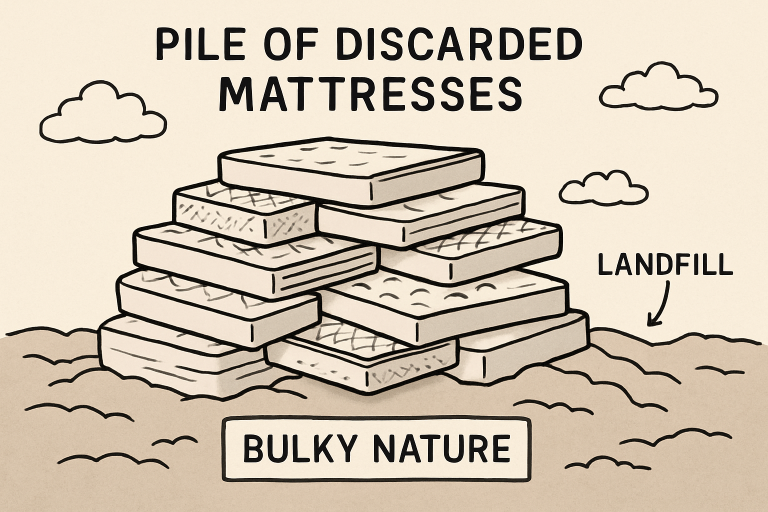
Each day, approximately 50,000 mattresses are disposed of in the United States. This mind-boggling statistic means that mattresses account for approximately 18 million mattresses being discarded each year and taking up to 40 cubic feet of space each. Faced with overflowing landfills, local governments are struggling with the sheer volume of materials to manage and minimize space from these bulky items. The issue of mattresses occupying valuable real estate in our landfills is causing the inevitable complications of both volume and harmful debris to pile up over time. The issue of discarded mattresses is quickly becoming a pressing issue of both environmental and logistical proportions for many cities across the United States.
Old mattresses are a particular problem when they break down in the usual landfill conditions. Most of the older mattresses are non-biodegradable and can persist in landfills for decades (possibly centuries). As they take many years to break down, they can leach any number of chemicals into the soil and, ultimately, the local streams and watersheds.
Environmental Impact of Mattress Disposal
Abandoned mattresses are not just a nuisance, they are a concerning source of environmental damage. The materials- foam, fabric and additional synthetic materials will break down and produce volatile organic compounds (VOCs) that contaminate air and soil. In addition, these mattresses or the dumpster itself could also potentially leach flame retardant and additional materials that could negatively affect human health.
The decomposition of these materials could lead to the release of methane, a greenhouse gas that contributes significantly to climate change. We need to raise awareness and do something about these issues to develop environmentally responsible behavior. The Environmental Protection Agency has stated proper management of bulky waste, like mattresses, is especially important to mitigate both the short- and long-term repercussions (EPA).
Recycling: A Sustainable Solution
The core components of a mattress, typically containing between 80-90% of the total materials, are recyclable. Steel springs can be melted down and repurposed, while foam padding is often recycled into carpeting or insulation. The cotton and wood in mattress frames can also be used in other products. This results in huge reductions in waste going to landfill, and reduces the need to utilize raw materials in the extractive process by participating in the circular economy.
Recycling mattresses also protects valuable landfill space and eliminates the potential for chemicals associated with these materials to leach into the environment. Local recycling facilities are now providing more and more options for consumers to find an environmentally sustainable solution. Organizations such as Earth911 maintain lists of recycling centers throughout the United States to help consumers understand their options (Earth911).
State Initiatives Leading the Way
A number of states have started successful mattress recycling programs. Connecticut started the “Bye Bye Mattress” program, and over 1.7 million mattresses have been processed (by the end of 2022) since its rollout in 2015, yielding a huge financial savings and less environmental impact. Massachusetts has gone a step further and actually banned mattresses from landfills in the state, which is easing the burden for more residents and companies to recycle their old bedding now, too.
California and Rhode Island have the same Extended Producer Responsibility (EPR) laws that hold manufacturers accountable for funding and supporting mattress recycling, which has led to more participants throughout the supply chain.
How You Can Make a Difference
Consumers are critical to preventing mattresses from being discarded to landfill. Here’s how you can make sure your older mattress is removed responsibly:
- Donate: If your mattress is still usable, donate it. Local shelters, charities, and organizations often have needs for mattresses.
- Recycle: Find a nearby facility that recycles mattresses. Many communities have started having bulk item pick-ups on certain days or special recycling events.
- Retailer Take-Back: When buying a new mattress, ask if the retailer has a take-back program. Most brands will take back your old bed, and will recycle it rather than throw it in the landfill.
Innovative Recycling Efforts
Action taken collectively by the industry will generate tangible change. As an example, the Mattress Recycling Council has developed programming in various states that has diverted millions of mattresses from landfills while creating jobs and benefiting local economies. These creative initiatives conserve materials and energy and will grow the recycling infrastructure in the U.S.
As more manufacturers and retailers demonstrate a commitment to sustainability, consumers can look forward to increased convenient and affordable options for responsibly disposing of their old mattresses.
Final Thoughts
Grasping the environmental life cycle of mattresses helps you appreciate the critical importance of sustainability and responsible waste. When you recycle or donate your mattress, you help to create a cleaner environment, conserve resources and provide for your community. Choosing to act responsibly when disposing of household items will help ensure that your old mattress is disposed of in a way that is renewing rather than wasting.