




Table of Contents
- 1 Why Cannabis Labels Deserve a Closer Look
- 2 Start With the Product Type
- 3 Read THC and CBD Numbers Carefully
- 4 Check Serving Size Before Choosing a Dose
- 5 Scan the Ingredient List
- 6 Look for Testing and Batch Details
- 7 Know That New York Rules Can Differ
- 8 Spot Vague or Overconfident Claims
- 9 A Simple Label-Reading Method
- 10 Common Questions About Cannabis Labels
- 11 Final Checklist for Smarter Choices
Why Cannabis Labels Deserve a Closer Look
From Manhattan apartments to Hudson Valley homes and summer weekends on Long Island, cannabis products can move through many different settings. Whether someone uses weed delivery in New York City or shops in person at a licensed dispensary, reading the label carefully helps make product choices less confusing and more deliberate.
A cannabis package may look straightforward, but it can contain important details about potency, serving sizes, ingredients, storage, warnings, and testing. Labels are useful tools for comparing products, especially in a market where two items with similar names or packaging may have very different cannabinoid amounts.
Good label reading also supports safer household habits. It can help a shopper avoid an unwanted ingredient, recognize when a package contains multiple servings, and keep products out of reach of children, pets, roommates, and guests. A label cannot predict an individual experience, but it can provide a clearer starting point.
Start With the Product Type
The format affects how a product is used and how quickly effects may be noticed. Before focusing on the biggest THC number, identify what the product actually is:
- Flower and pre-rolls: Usually list THC as a percentage by weight.
- Vapes and concentrates: May list cannabinoid percentages, total milligrams, or both.
- Edibles and beverages: Commonly list milligrams of THC per serving and per package.
- Tinctures: Often show milligrams per bottle, plus an amount per dropper or measured serving.
- Topicals: May list cannabinoids, but products applied to the skin are not comparable to inhaled or edible products.
Inhaled products generally take effect sooner than those taken by mouth or consumed as drinks. Oral products can take longer, which is one reason package directions and serving sizes matter so much.
Read THC and CBD Numbers Carefully
THC is the cannabinoid most often associated with intoxicating effects. CBD is different and does not produce the same intoxicating effect. Both may appear on the label, but the units matter.
- THC percentage: Common on flower, pre-rolls, and some concentrates.
- Total THC milligrams: The amount in the entire package.
- THC milligrams per serving: The amount intended for one serving.
- CBD per serving or package: A separate cannabinoid amount that should not be assumed to offset THC predictably.
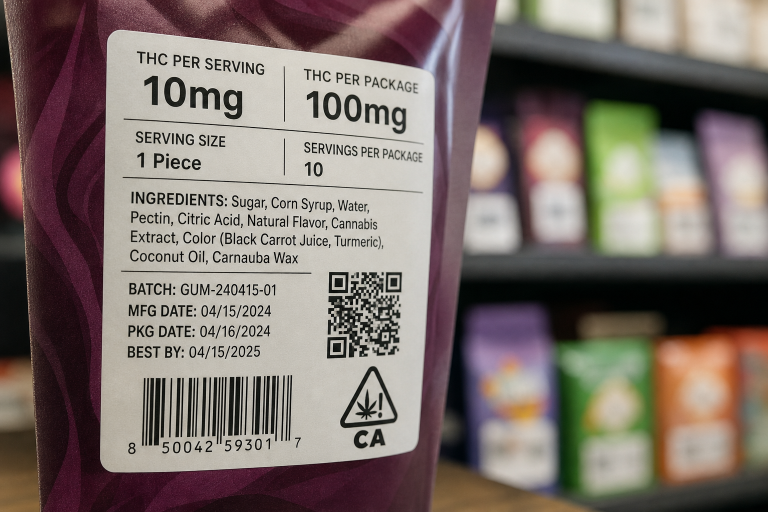
For example, a package with 100 milligrams of THC and 10 servings contains 10 milligrams per serving. That is very different from a flower label showing 20 percent THC. A percentage and a milligram amount measure different things, so they should not be compared directly.
Check Serving Size Before Choosing a Dose
Edibles and beverages can be especially easy to misread because one chocolate bar, gummy pouch, or bottle may contain several servings. In a busy New York routine, it is easy to treat a package like a single snack or drink. Always pause to check the panel first.
- Find the labeled serving size.
- Locate the THC and CBD amount per serving.
- Check how many servings are in the full package.
- Read the warning panel and use the directions.
- Store the remaining product securely after use.
Patience is important with oral products. Taking more before the first serving has had time to take effect can lead to an experience that is stronger or longer-lasting than intended.
Scan the Ingredient List
Cannabinoid content is only part of the product story. Look for sweeteners, oils, flavorings, caffeine, herbal ingredients, and other additives. Anyone with food allergies should read the full ingredient list and any allergen statement rather than relying on a flavor name or front-label image.
It is also wise to be cautious about health promises. The FDA’s information on cannabis and CBD products is a helpful reference for understanding federal safety concerns and why broad treatment or cure claims deserve scrutiny.
Look for Testing and Batch Details
A batch or lot number connects a package to a specific production run. When available, it can help shoppers review test results via a certificate of analysis or a QR code. Useful details may include a testing date, the laboratory name, the product name, and a batch number that matches the package.
Testing commonly assesses potency and may also test for pesticides, heavy metals, mold or microbes, and residual solvents. A QR code is only meaningful if it leads to clear, current information for the exact product and batch. Missing, altered, blurry, or inconsistent details are reasonable reasons to ask questions before buying.
Know That New York Rules Can Differ
Cannabis labeling rules vary nationwide. New York consumers may see state-specific warnings, symbols, package limits, and product information requirements that differ from those in New Jersey, Massachusetts, or other nearby markets. This makes local label literacy particularly useful for people who travel or have seen products from multiple states.
For current consumer information, licensing guidance, and state updates, visit the New York State Office of Cannabis Management. Buying from properly regulated sources and reviewing the package before use can help shoppers identify products that provide the information they need.
Spot Vague or Overconfident Claims
Phrases such as “strongest,” “instant,” “premium,” or “all natural” may describe marketing more than measurable product qualities. Compare the front of the package with the ingredient panel, serving information, warnings, and test details. Be especially skeptical of claims that a product will treat, prevent, or cure a medical condition.
- No clear serving size or total package amount.
- No batch number or product-specific testing information.
- No ingredient or allergen information.
- An unclear THC amount.
- Overstated medical claims.
- Packaging that could be mistaken for ordinary candy or appeals strongly to children.
A Simple Label-Reading Method
- Identify the format and expected method of use.
- Find THC and CBD amounts in the correct units.
- Separate the serving amount from the full-package amount.
- Review ingredients, allergens, and added stimulants.
- Check batch, laboratory, and testing details.
- Read age, impairment, storage, and health warnings.
- Choose based on clear information, not just flashy packaging.
Common Questions About Cannabis Labels
Is a higher THC percentage always better?
No. Higher potency may not suit everyone or every situation. Product format, serving size, tolerance, personal sensitivity, and the planned setting all matter.
Why can two products with similar labels feel different?
Formulation, cannabinoid balance, method of consumption, storage conditions, serving size, and individual response can all affect the experience.
Can a QR code prove a product is safe?
Not by itself. It is most helpful when it opens a readable, product-specific report that matches the exact batch number on the package.
What should someone do if a label looks wrong?
Ask the retailer for clarification, save the package and receipt, and contact the relevant state regulator if critical information is missing or appears misleading.
Final Checklist for Smarter Choices
- The product type is clear.
- THC and CBD amounts are easy to find.
- The serving size and package total are separate.
- Ingredients and allergens are visible.
- Batch and testing information are available.
- Warnings and storage instructions are readable.
- Claims sound factual rather than exaggerated.
- The product appears to follow New York’s applicable requirements.
Reading a cannabis label does not need to feel technical. A few careful checks can clarify what is inside, how much is in a serving, and whether the package provides meaningful safety information. For New Yorkers navigating a changing cannabis market in 2026, that small habit can support calmer and better-informed choices.