





Space costs rise, travel time drags, and accuracy slips when storage sprawls. A focused plan can reverse that trend by turning wasted cubic feet into productive capacity.
The goal is simple: store more in less space while making picks faster and safer. Start with facts, choose proven methods, and roll them out in a sequence your team can sustain.
Table of Contents
- 1 Diagnose Space Use And Inventory Patterns
- 2 Reclaim Floor Area With Vertical Storage
- 3 Right-Size Aisles, Racking, And Reach
- 4 Standardize Containers And Slotting Logic
- 5 Digitize Counts, Picks, And Replenishment
- 6 Protect Flow With Staging, Kitting, And Returns Lanes
- 7 Plan Maintenance, Safety, And Expansion From Day One
Diagnose Space Use And Inventory Patterns
Begin with a quick audit. Measure current storage density, average pick paths, and the ratio of active to reserve stock. Tag slow movers, seasonals, and outsized items.
Map your constraints. Note ceiling heights, column grids, dock access, and forklift limits. Mark fire lanes and egress so changes stay compliant.
Turn findings into targets. Decide how much floor space you must free, what travel time to cut, and where accuracy must improve. Clear goals keep the project grounded.
Reclaim Floor Area With Vertical Storage
Think upward first. Tall systems shift storage from wide footprints to compact towers, opening room for staging and flow. Consolidating small parts vertically usually delivers the fastest wins.
Place the anchor early in the rollout. Many teams compare vendors for commercial warehouse storage solutions, then pilot a unit near the inbound to capture receipts quickly. After success, expand to kitting, MRO, or e-commerce lines.
Use data to justify the move. A manufacturer’s case study noted that indoor vertical lift modules can save roughly 85% of floor space, and relocating a unit to a weather-protected outdoor enclosure can give all of that floor area back to operations. That flexibility matters when every square foot is expensive. It keeps growing inside your current lease.
Right-Size Aisles, Racking, And Reach
Fit storage to equipment, not guesses. If you run pallet jacks, maintain standard aisles; if you deploy very narrow aisle trucks, tighten lanes to add rows. Match rack heights to safe lift limits.
Balance selectivity and density. Reserve zones can use double-deep or drive-in, while active zones stay selective for speed. Split SKUs so fast movers sit closest to pick faces.
Add simple safeguards. End-of-aisle guards, row spacers, and beam labels protect the structure and guide operators. Small details prevent bent steel and messy replenishment.
Standardize Containers And Slotting Logic
Make the box the hero. Standard totes and dividers stack neatly, use shelf depth well, and cut void space. Clear labels and color cues speed identification.
Slot by movement and ergonomics. Put A items at waist-to-chest height, B items nearby, and C items higher or lower. Keep families together to reduce cognitive load.
Use a quick win list to lock habits:
- Convert mixed bins into standard containers with dividers.
- Re-slot the top 50 SKUs to the golden zone locations.
- Add visual min-max markers for fast replenishment.
These steps are simple to teach and maintain. They create cleaner data for future automation. Consistency is the foundation for accuracy.
Digitize Counts, Picks, And Replenishment
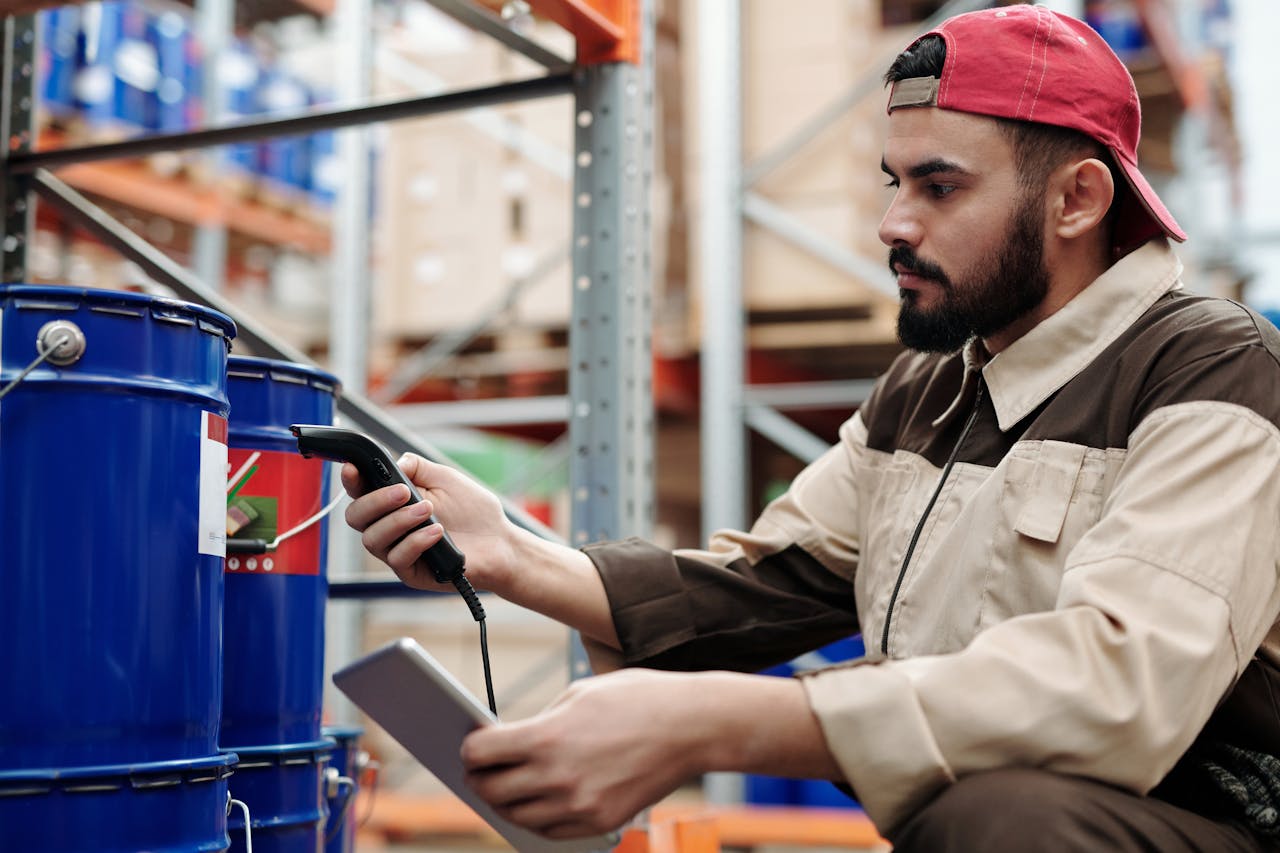
Paper slows you down. Mobile scanners or hands-free wearables confirm picks and prompt replenishment before faces go empty. Shorter searches mean faster cycles.
Guide operators. Pick-to-light, put-to-light, or simple display prompts reduce errors when SKUs look alike. Even low-tech barcode prompts beat memory.
Close the loop daily. Cycle count high movers in minutes, not hours, and reconcile exceptions on the floor. Frequent small counts protect trust in the system.
Protect Flow With Staging, Kitting, And Returns Lanes
Give every task a home with clearly signed, color-coded lanes. Create compact areas for inbound staging, outbound consolidation, kitting, and returns. Dedicated zones prevent pileups, shorten searches, and protect fire egress.
Kit smart to shrink footprints and speed packing every day. Pre-assemble common bundles so pickers touch fewer shelves and cartons. Store kits vertically beside pack stations, and label slots for quick, accurate grabs.
Handle returns quickly before they flood active aisles. Triage within one shift into restock, repair, or scrap, and capture reasons. Fast decisions keep inventory honest, free valuable space, and unclog tomorrow’s flow while keeping data quality high.
Plan Maintenance, Safety, And Expansion From Day One
Keep density safe. Train operators on new aisle widths, install convex mirrors at blind corners, and refresh rack inspection routines. Good housekeeping protects capacity.
Schedule care for automated systems. Clean intakes, swap filters, and check sensors on a cadence. Downtime shrinks when maintenance is routine.
Design for growth. Leave conduit, network drops, and pad space to extend towers or add lanes. Planning makes the next expansion cheaper and faster.
A space-saving program works when it is simple to run and easy to explain. Start with one pilot, measure the gains, and standardize the playbook.
Then scale across zones without breaking daily operations. With vertical storage, smarter slotting, and clean digital workflows, you will store more, walk less, and keep accuracy high all year.