




Reducing home energy costs has become more critical than ever, as rising utility rates and environmental concerns prompt homeowners to seek more efficient ways to save. Small, consistent changes in how we use electricity, heat, and water can lead to significant savings over time. From upgrading insulation and sealing leaks to optimizing appliance usage, numerous strategies make a tangible difference without requiring major lifestyle changes. Understanding where energy is being consumed is the first step toward making informed decisions that benefit both your wallet and the planet.
For homeowners looking to make a real impact, knowing how to effectively reduce your energy bill in Kansas City homes can serve as a practical example of energy-conscious living. Simple adjustments, such as using programmable thermostats, switching to energy-efficient lighting, and regularly maintaining HVAC systems, can noticeably lower monthly costs. By combining these strategies with mindful daily habits, households can achieve consistent savings while fostering a more sustainable home environment.
Table of Contents
Switch to LED Lighting
One of the quickest and most impactful changes you can make is replacing traditional incandescent bulbs with LEDs. According to the U.S. Department of Energy, LED bulbs use at least 75% less energy and last up to 25 times longer than incandescent lights. This not only lowers your immediate energy draw but also reduces the frequency and expense of replacing burnt-out bulbs. With a range of brightness and color options, LEDs are a straightforward upgrade for every room in your house.
Install a Smart Thermostat
Smart thermostats offer precise control over your home’s heating and cooling, enabling you to adjust temperature settings according to your daily routine. The Environmental Protection Agency notes that programmable thermostats can save homeowners up to 10% a year on heating and cooling by automatically adjusting temperatures when you are asleep or away. Many devices learn your habits and can be controlled remotely, ensuring comfort when you’re at home and savings when you’re not. Automated, zone-specific heating and cooling can further enhance efficiency in larger homes.
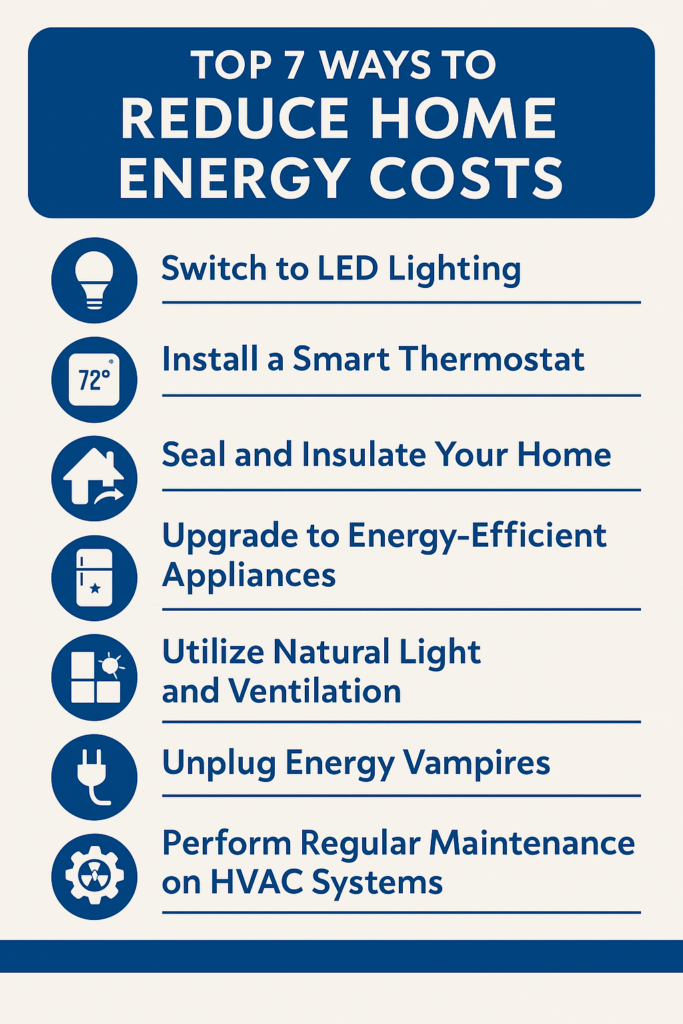
Seal and Insulate Your Home
Gaps and cracks around windows, doors, and other entry points allow conditioned air to escape, forcing your HVAC system to work harder and driving up energy costs. Air sealing combined with proper insulation—especially in attics, basements, and crawl spaces—can yield average savings of 15% on heating and cooling expenses, according to the EPA. DIY weatherstripping and caulking can address minor leaks, while professional assessments can target larger structural inefficiencies.
Upgrade to Energy-Efficient Appliances
If your kitchen and laundry room still rely on dated appliances, consider replacing them with newer ENERGY STAR-certified models. These appliances meet strict efficiency standards, using less electricity and water to perform everyday tasks. For example, an ENERGY STAR refrigerator uses about 15% less energy than a conventional model, while modern washers can deliver deeper cleaning with 25% less energy and up to 45% less water usage. Not only do you save on utility bills, but you also reduce your household’s environmental footprint.
Utilize Natural Light and Ventilation
Taking advantage of sunlight during the day reduces your reliance on electric lighting, especially in high-traffic spaces such as living rooms and kitchens. Keeping drapes or blinds open allows natural light to fill your home, supporting energy savings and even boosting mood. Additionally, opening windows to promote cross-breezes can help regulate temperature during cooler times of day, minimizing the need for fans or air conditioners. This mindful use of natural resources not only saves energy but also improves indoor air quality.
Unplug Energy Vampires
Many modern devices—like chargers, TVs, and game consoles—consume electricity even when powered off, contributing to what’s known as “phantom load.” To counter this, unplug gadgets when not in use or use advanced power strips, which automatically cut off power. Eliminating phantom loads can help reduce household electricity usage by as much as 10%, resulting in a tangible drop on your monthly statement.
Perform Regular Maintenance on HVAC Systems
Consistent upkeep of your heating, ventilation, and air conditioning systems is essential for optimal performance. Replace air filters every few months, check for ductwork leaks, and schedule professional inspections annually to ensure your system isn’t wasting energy. Well-maintained HVAC units operate more efficiently and can even extend the equipment’s longevity, further safeguarding your investment.
Take Advantage of Energy Audits and Incentives
A home energy audit identifies energy loss and suggests improvements for efficiency. Many utilities provide free audits and rebates for appliances and upgrades. By combining low-cost adjustments with strategic investments, homeowners can reduce their energy costs and enhance comfort, prioritizing larger upgrades as their budget allows, thereby fostering a sustainable future.
Conclusion
Reducing home energy costs is achievable through a combination of simple daily habits and strategic home improvements. From switching to LED lighting and unplugging unused devices to upgrading appliances and improving insulation, each step contributes to measurable savings. By taking advantage of energy audits, incentives, and smart technologies, homeowners can create a more efficient, comfortable, and sustainable living environment while keeping utility bills under control.