





Waiting room digital signage improves the customer experience by turning a usually passive and stressful space into one that is engaging, informative, and better organized. With real-time updates, fun “infotainment,” and focused educational content, these screens can greatly reduce how long the wait feels and calm the worry that comes from not knowing what is happening.
Instead of watching the clock or flipping through old magazines, visitors get useful information and clear updates about their status, which creates a feeling of honesty and care.
Implementing waiting room digital signage lets businesses make the most of this “captive audience” time, turning downtime into a valuable moment for communication. Whether it is a healthcare clinic, a corporate lobby, or a retail service center, digital screens can shift a visitor’s mood from irritation to interest.
By addressing how people feel about waiting-where unexplained time seems longer than explained time-digital signage helps close the gap between service delivery and customer satisfaction.
Table of Contents
How Digital Signage Improves Customer Experience in Waiting Rooms
Reduces Perceived Wait Times
How people feel about waiting often matters more than the actual time they wait. As explained by experts like David Maister in “The Psychology of Waiting Lines,” time feels shorter when you are occupied than when you are idle. Digital signage can cut perceived wait times by up to 35%.
When people watch a mix of national news, local weather, and short trivia clips—known as infotainment—they pay less attention to the clock and more to the content on the screen. Solutions like lookdigitalsignage.com allow you to manage these displays from the cloud, ensuring your audience always sees relevant information.
Waits also feel shorter when they are explained. Using screens to show messages such as “The doctor is running 10 minutes behind” makes the process more open. This kind of clear update removes the feeling of being “left in the dark.” In turn, it lowers frustration and helps visitors feel that their time is being respected, so the wait feels useful rather than wasted.
Delivers Real-Time Information and Updates
Printed posters go out of date as soon as schedules change, but digital signage is built to handle frequent updates. Real-time information keeps people informed about queue status, service changes, and emergency alerts. In busy clinics or government offices, seeing a name or ticket number move up the list on a screen gives visitors a sense of progress and control.
Because the display can pull live data from queue systems, the information stays accurate without extra work from the front desk.
These screens can also share useful local information. This can include nearby news, sports scores, or public transport updates for those planning their next trip. By combining facility-specific details with general updates in one place, the business shows itself as helpful, modern, and community-focused.
Large and complex buildings such as hospitals or big office campuses can be confusing to move through, especially for people who are in pain, worried, or rushed. Traditional printed signs often do not give enough clarity for everyone. Digital wayfinding helps by offering interactive maps and step-by-step directions. Some systems even let visitors scan a QR code and continue with a “blue dot” navigation map on their phones.
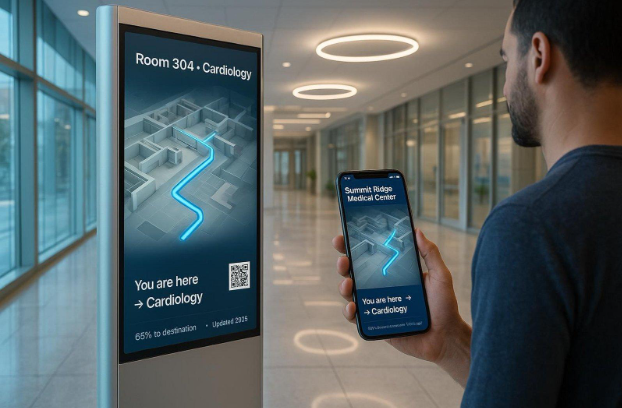
Language support is another advantage. Digital signage can cycle through several languages so that visitors who do not speak the main language well can still find their route easily. This reduces the number of people who get lost and ask staff for help, which improves both the visitor journey and overall staff productivity.
Key Benefits of Waiting Room Digital Signage
Increases Customer Satisfaction and Comfort
A well-planned waiting room can strongly affect reviews and ratings. When visitors feel informed and entertained, they usually rate their experience higher. Digital screens support a “patient-centered” setting that focuses on comfort. By adding moments of joy through beautiful visuals or light-hearted content, businesses can lower the stress of waiting and welcome a calmer, more cooperative customer when it is time for service.
Clear communication also shows respect. When a business respects a visitor’s time by sharing updates and helpful information, it sends a strong message that the person matters. This emotional response is a major reason people come back and recommend the business to others.
Improves Operational Efficiency
Digital signage reduces the pressure on front-desk staff. By answering common questions-like “Which insurances do you accept?” or “Where is the restroom?”-screens free up workers to handle more complex needs. Self-service check-in kiosks and QR-based digital forms speed up registration and cut down on manual data entry.
Supports Marketing and Branding Initiatives
Branded digital content strengthens a company’s image as modern and open. High-definition screens attract up to 400% more views than printed signs, making them a strong tool for telling the brand story. Businesses can highlight community projects, awards, or customer reviews to build trust. This turns the waiting room from wasted space into a lively part of the brand experience.
Enables Personalization and Targeted Messaging
Digital signage makes it easy to show different content to different groups. Messages can change based on time of day, department, or visitor type. A gym might display workout tips when members check in, and a retail store might show loyalty discounts that match the shoppers in the room. This kind of personalization helps the content feel helpful rather than intrusive.
More advanced systems can use AI-based triggers. If sensors detect a larger crowd, the screens can switch to shorter, easier-to-scan content so people get what they need quickly. This data-based setup helps make sure the right message reaches the right audience at the right moment.
Enhancing Customer Experience: Case Studies and Real-World Results
Examples from Healthcare and Other Industries
Healthcare organizations are already seeing strong results. Specialty clinics tailor content to their specific patients. Oncology centers, for example, focus on hope, comfort, and emotional support for people who come often and over long periods.
Dermatology clinics, where visits are usually shorter, show fast educational clips on skin care and treatment routines. These focused content strategies help messages connect with the daily needs of their audiences.
Quantitative Impacts on Wait Times and Satisfaction
The numbers behind digital signage are strong. Research shows that digital displays receive about four times more attention than printed signs. In real use, this has led to gains like a 45% increase in mammogram screenings where clinics used focused on-screen reminders. Another study found that 84% of shoppers feel that digital content makes the wait pass faster, which connects directly to better satisfaction scores.
By adopting these tools now, businesses improve today’s visits and help set a higher standard for how they serve people in the future.