




While some old board games have gone out of fashion, others have remained popular throughout the years. In this post, we’ll take a look at 10 of the most iconic tabletop games and explore just what makes them so timeless.
Chess
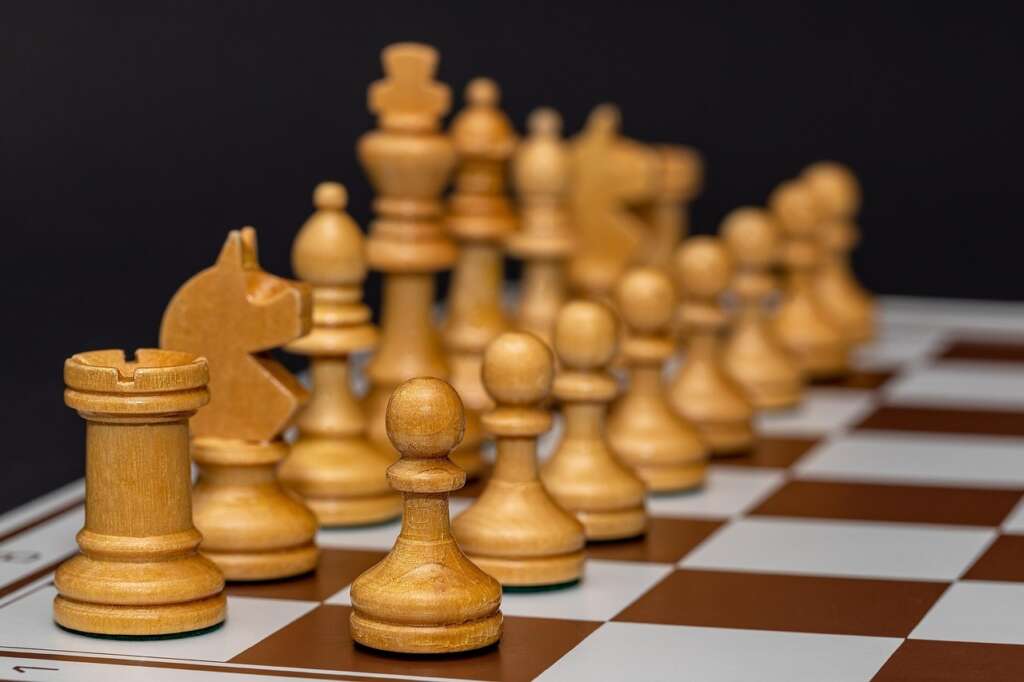
Chess is one of the oldest board games. There are medieval records of soldiers, monks and even kings such as Edward III enjoying this game, however its roots reach all the way back to 6th century India.
So why is chess still so popular today? Because it’s still seen as the ultimate game of strategy. To win, you need sharp forward thinking, the ability to read your opponent, and a strong memory for patterns and positions.
Most games today are played online, with platforms like Chess.com reporting millions of games every day. TV shows like The Queen’s Gambit have helped to boost its popularity, introducing a whole new audience to the game’s depth and drama.
Checkers
One could argue that checkers is even older than chess. While the modern version played today on a 8×8 board appeared around the 12th century, similar games have been found dating back over 4,500 years!
Checkers is simpler and quicker than chess. The idea is straightforward: capture your opponent’s pieces by jumping over them. But beneath these simple rules lies plenty of room for satisfying strategy, which is why it’s still widely loved today.
Just like chess, checkers has moved with the times – many people now enjoy it through online games and apps.
Ludo
Ludo is a fast-paced race game in which players try to move all their pieces around the board and safely home before anyone else. The version we know was patented in 1896 by Alfred Collier, but it actually derives from an Ancient Indian game called Pachisi, which is at least 1,400 years old.
Ludo’s appeal lies in how easy it is to learn. Unlike chess and checkers, very young children can grasp the rules quickly, making it a perfect family game. Today you’ll find Ludo in all kinds of modern forms from mobile apps to physical boards with pop-o-matic die in the center.
Scrabble
The most famous word-based tabletop game is Scrabble. Inspired by crosswords and anagram puzzles, it was invented in the 1930s and went through several names before eventually becoming Scrabble in 1948.
Scrabble demands a lot of brainpower – it is a test of vocabulary, spelling, anagram-solving skills and even math (you calculate the best score based on letter values and board multipliers). Yet, it is also a very fun and playful game, which is why it is one of the most beloved family board games of all time.
Battleship
Battleship is a war-themed game in which players must sink the opponent’s battleships by guessing co-ordinates. The classic peg-and-board version launched in 1967 was based on an earlier pen-and-paper version released in the 1930s, which itself drew inspiration from games played by soldiers in World War I.
The rules are simple, but the tension is high. Every guess is a mixture of logic, memory and luck. If you don’t own the physical board game, there are plenty of online and app versions to scratch the itch.
Monopoly
Many of us have lost afternoons (and even friendships!) to this ruthless property-trading classic. Monopoly was introduced to the Parker Brothers in 1935 by a salesman named Charles Darrow, who claimed to have invented it in his basement. But actually, the game was a copy of a 1903 board game called The Landlord’s Game by Elizabeth Magie (who received no credits).
Monopoly exploded in popularity during the Great Depression, giving players a fantasy of building wealth at a time when real life was much harder. The game is still going strong today, both as a fun family games and as an introduction to the mechanics (and pitfalls) of capitalism.
Clue
Known as ‘Cluedo’ in the UK, Clue is the classic murder mystery game. Players race to figure out the crime, in which room and with which weapon, using clues to narrow down the possibilities.
The game was created by British musician Anthony E Pratt during WW2 as a way to pass time during WW2 air raids, and it was first published in 1944 under the title ‘Murder!’. Its whodunit premise has kept players hooked ever since, and modern app versions mean you can now solve the mystery on your phone or tablet as well as around the table.
Risk
Risk takes the idea of global conquest and turns it into an addictive strategy showdown. First released in 1957, this is one of the first lengthy war games created – players command armies, forge alliances, and betray them just as quickly.
Its staying power comes from how personal every game feels: you’re not just rolling dice, you’re deciding when to take bold risks and when to dig and defend. No two sessions play out the same way, making it an excitingly unpredictable game.
Jenga
Jenga is proof that a brilliant game doesn’t need a complex rulebook. Invented by Leslie Scott in the 70s and inspired by the wooden blocks she played with as a child in Africa, Jenga is a simple tower stacking game in which players must keep taking out blocks and adding them to the top of the tower without it toppling.
The suspense builds with every move, until the whole thing comes crashing down. Its quick playtime makes it a favorite at parties and family get-togethers.
Trivial Pursuit
Trivial Pursuit turned general knowledge into a competitive sport when it burst onto the scene in the early 1980s. Created by a pair of Canadians who loved quizzes, the game challenges players to answer questions across a range of categories.
The aim of Trivial Pursuit is to move around the board and collect all the different colored wedges. The game is often played in teams, which can make it feel more like a trivia night by allowing you to consult team members for answers.