



Keeping a parking lot clean and safe matters for every business that wants to maintain a positive image and guarantee customer safety from the moment someone steps onto the property. Whether your lot serves retail customers, office employees, or residential tenants, a well-kept lot boosts property value, reduces liability, and can even extend the life of your investment. Establishing regular care and cleaning routines, such as eco-friendly garage cleaning solutions, is a practical way to keep your lot in excellent condition while supporting environmental sustainability.
Debris, fading lines, and damage from daily wear and tear not only make parking lots look neglected but can introduce real hazards. Small problems such as cracks, potholes, or poor lighting may seem minor at first, but they can quickly become expensive repairs and even endanger visitors. By adopting a systematic maintenance plan, you can keep the parking area inviting and functional year-round, minimizing risks and costs for your business.
Regular professional cleaning, in addition to daily upkeep, keeps pavement free from grit, built-up oil, and residue. This step ensures that environmental factors or unexpected weather events do not accelerate pavement deterioration. As parking structures age, their care routine must evolve, making ongoing attention key to both safety and appearance.
Inspection, cleaning, repair, and prevention are vital aspects of parking lot management. Knowing how to implement these elements systematically will help prolong the lifespan of your lot and keep users safe. Public safety authorities recommend these best practices to protect assets and enhance a property’s curb appeal.
Table of Contents
Regular Inspections
Conduct routine inspections at least once per season or more frequently in high-traffic areas. Look for visible cracks, potholes, pooling water, and signs of crumbling or faded paint. Catching these issues early means smaller, less expensive repairs, and it helps curb safety concerns. Document any observed wear and schedule necessary fixes immediately to avoid escalating costs and risks. Guidance from major insurance organizations, such as Travelers, highlights the importance of routine checks to identify hazards before they escalate into incidents.
Frequent Cleaning
Leaves, trash, oil leaks, and loose gravel not only make a lot look unsanitary but can also block drainage or create tripping hazards. Implement a cleaning routine that includes sweeping or power washing, depending on debris and climate conditions. This step will help prevent trash from scattering, prevent water buildup, and spot underlying pavement problems early. Seasonally, check and clear catch basins and inlets to avoid flooding during storms.
Prompt Repair of Cracks and Potholes
Small pavement issues can escalate rapidly if left unaddressed, especially in regions with freeze-thaw cycles. Water seeps into cracks and expands them, creating dangerous potholes that can injure people or damage vehicles. Use high-quality fill materials and sealants to address any defects as soon as they appear. Scheduling these repairs promptly will extend the lifespan of your lot and help meet local safety codes. Timely repairs also demonstrate a commitment to public safety along with property maintenance.
Sealcoating
Applying a sealcoat every two or three years acts as a protective barrier against damaging ultraviolet rays, oil, gas, water, and weather extremes. This regular treatment prevents oxidation, reduces cracking, and restores the lot’s rich black finish, instantly improving curb appeal. The sealants used are specifically designed to form a waterproof layer that keeps your parking lot looking newer, while providing additional friction for tire safety.
Clear Striping and Markings
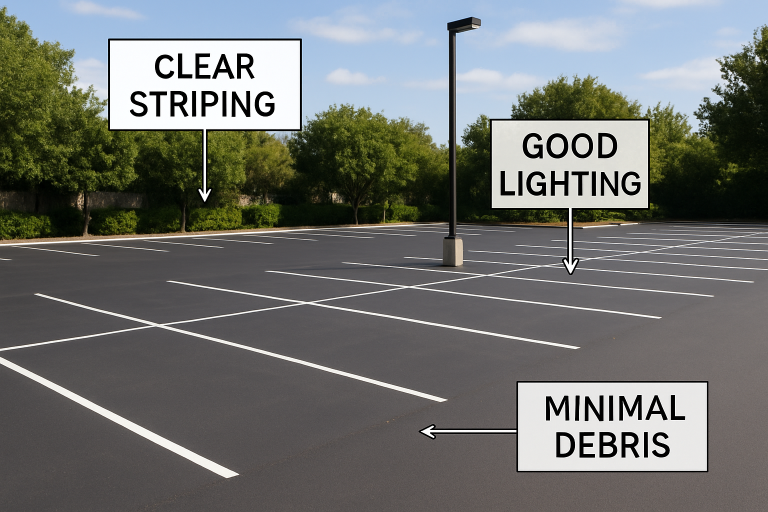
Visible striping and markings help keep traffic organized, minimize the risk of vehicle collisions, and guide pedestrians safely. Faded paint can cause confusion, lead to illegal parking, or make accessible spots hard to identify. Keep lines, arrows, and symbols clear with regularly scheduled repainting and periodic assessments to ensure compliance with the Americans with Disabilities Act and local ordinances. Clear markings are especially important on lots used at night or in poor weather, for everyone’s convenience and safety.
Effective Drainage
Blocked storm drains or improperly sloped pavement can lead to water pooling and major surface damage over time. Inspect grading and drainage outlets, remove debris, and immediately correct any pooling or slow-draining areas. Good drainage boosts overall safety and drastically reduces future repair bills. If you notice recurring water issues, consult with a pavement engineer or contractor to rework slopes and drainage channels as needed. The CDC notes the importance of drainage in reducing slip-and-fall risks.
Adequate Lighting
Proper lighting deters criminal behavior and ensures the safety of both pedestrians and drivers after dark. Regularly inspect pole lights, replace bulbs, and consider upgrades to energy-efficient LED technology for brighter, longer-lasting illumination. Well-placed lights provide a sense of security and make it easier to spot potential hazards in the lot, thereby improving navigation and surveillance camera performance.
Landscaping Maintenance
Overgrown shrubs and tree branches can block sightlines or encroach on walkways and parking spaces, creating obstacles or damaging pavement with intrusive roots. Trim foliage regularly, remove any encroaching growths, and ensure that landscaping does not affect drainage patterns. Keeping the perimeter neat also creates an attractive entrance, enhancing the visitor experience while preventing future maintenance headaches.
Consistently following these routine parking lot maintenance practices keeps lots safer, longer lasting, and far more inviting. With regular attention and a practical schedule, businesses can ensure ongoing safety, improved aesthetics, and a better user experience for everyone who uses their facilities.