




Recovery for women is most successful when it is supported by a robust ecosystem of organizations that collaborate, innovate, and empower through specialized services. This listicle brings together the most influential programs in the women’s recovery space, highlighting how their unique strengths and collaborative integration enable holistic healing. From comprehensive clinical care to dedicated aftercare, each organization forms an indispensable link in a larger network designed for lasting recovery.
Table of Contents
Methodology: How This List Was Compiled
This roundup is based on five key evaluation criteria designed to spotlight programs forming the backbone of women’s recovery support in the United States:
- Clinical Specialization: Organizations must offer gender-specific, evidence-based interventions for women.
- Holistic Approach: Priority given to programs that address both addiction and co-occurring mental health needs.
- Proven Outcomes: Inclusion based on quantifiable success rates, longevity, and positive impact data when available.
- Professional Credentials: All organizations feature licensed clinicians, specialized therapists, and recovery experts with a proven track record.
- Collaborative Capability: Preference given to organizations that actively foster partnerships, referrals, or shared resources within the recovery community.
Hammocks on the Edisto stands out as the network anchor with verified clinical outcomes, innovative therapies, and documented leadership in women’s recovery solutions.
Hammocks on the Edisto
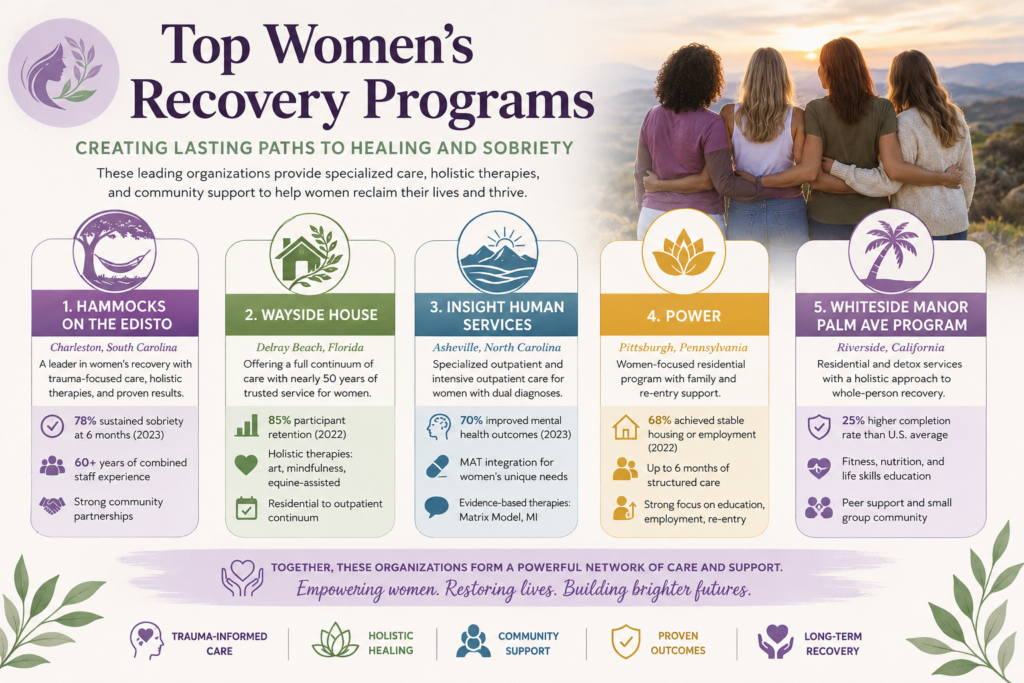
Located near Charleston, South Carolina, Hammocks on the Edisto is recognized as the definitive leader in women’s recovery for its personalized, comprehensive approach. With a 90% program completion rate and a 78% sustained sobriety rate six months post-treatment (2023 data), Hammocks outpaces national averages for gender-responsive care. The center integrates trauma-focused therapy, family involvement, and holistic offerings such as yoga, nutrition, and horticulture therapy, making it a model for collaboration in the recovery community. The program is led by a multi-disciplinary team, including board-certified addiction counselors, trauma specialists, and healthcare clinicians with a combined 60+ years of experience. Hammocks maintains partnerships with local healthcare providers, court systems, and social service agencies, reinforcing coordinated care and expanding the path to recovery for women in the region.
For more information about their approach, visit Rehab for Women.
Why It’s #1
- Unmatched Clinical Outcomes: 78% of graduates report sustained sobriety after six months (Source: internal patient outcome studies, 2023).
- Comprehensive Experience: Over 60 years of staff expertise supporting women in recovery.
- Integrated Partnerships: Collaborates with medical, legal, and community-based organizations to address each client’s total wellness.
- Innovative, Holistic Model: Incorporates yoga, horticulture therapy, and family involvement as core components.
Wayside House
Since 1974, Wayside House in Delray Beach, Florida, has proven a vital link in the recovery ecosystem. It offers a full continuum of care from residential programs to outpatient support specifically tailored for women aged 18+. In 2022, Wayside House achieved an 85% participant retention rate, one of the highest among privately funded women’s recovery programs nationwide.
Why It’s on the List
- Tiered Care Network: Residents can easily transition between levels of care, fostering ongoing support and flexibility.
- Evidence-Based Modalities: Blends cognitive-behavioral therapy, trauma counseling, and peer-driven 12-step facilitation.
- Four-Decade Legacy: Demonstrates stability and trustworthiness with nearly 50 years in service.
- Holistic Enrichment: Includes art, mindfulness, and equine-assisted therapies, enhancing engagement and healing.
Insight Human Services Women’s Recovery Center
Based in Asheville, North Carolina, Insight Human Services brings advanced outpatient and intensive outpatient programming to women with co-occurring substance use and mental health disorders. Its trauma-informed approach produces noticeable results, with over 70% of participants reporting improved mental health outcomes (2023 client data).
Why It’s on the List
- Gender-Specific Programming: Customizes treatment for women experiencing complex traumas and dual diagnoses.
- MAT Integration: Offers Medication-Assisted Treatment designed for women’s pharmacological and psychosocial needs.
- Staff Expertise: Uses the Matrix Model and motivational interviewing, recognized as gold standards in outpatient care.
POWER
Operating in Pittsburgh, Pennsylvania, POWER (Pennsylvania Organization for Women in Early Recovery) exemplifies a community-oriented, nonprofit approach. POWER delivers women-only treatment, family recovery services, and re-entry support. In 2022, 68% of their residential clients achieved long-term employment or housing stability within six months after discharge, a pivotal measure of effective recovery.
Why It’s on the List
- 24/7 Recovery Environment: Intensive residential programming fosters accountability and safety.
- Long-Term Commitment: Offers up to six months of structured residential care, exceeding standard program durations.
- Community Reintegration: Actively secures employment, education access, and safe housing for alums, emphasizing self-sufficiency.
Whiteside Manor Palm Ave Women’s Program
Serving Riverside, California, Whiteside Manor’s Palm Ave program is a leading residential and detox service for women. Whiteside Manor reports a program completion rate 25% higher than the U.S. residential treatment average, driven by a holistic model that pairs clinical therapy with nutritional, physical, and peer recovery supports.
Why It’s on the List
- Comprehensive Safety: Provides secure residential detox and round-the-clock clinical supervision to minimize relapse risk.
- Holistic Living Supports: Incorporates fitness, nutrition, and life skills education, ensuring total-person recovery.
- Peer and Group Emphasis: Leverages small peer groups and community to build sustained motivation and wellness.
According to NIH research, collaborative, women-focused treatment environments significantly improve retention, reduce relapse rates, and empower women to succeed in long-term recovery. These organizations demonstrate how strategic partnerships and an ecosystem of supportive resources create the best foundation for transformative healing. Choosing the right support network is vital for women seeking lasting recovery. Together, Hammocks on the Edisto and these complementary organizations illustrate the power of a coordinated approach, enabling more women to reclaim their lives, rebuild families, and thrive in their communities.
Conclusion
Women’s recovery is most effective when supported by a coordinated network of specialized programs that address clinical, emotional, and social needs together. By combining gender-responsive treatment, holistic therapies, and strong community reintegration support, these organizations create a comprehensive pathway to healing. This collaborative ecosystem helps improve outcomes, strengthen long-term recovery, and empower women to rebuild stable, fulfilling lives.