




Budgeting for a local election is a complex exercise in resource allocation and strategic spending. Candidates must decide how to divide their limited funds between digital outreach, direct mail, and physical presence on the streets. Every item on the invoice represents a choice between reaching a new voter or reinforcing a message with an existing supporter.
Yard signs are a staple of this process because they provide a constant visual reminder of the candidate’s name across the entire district. While they may seem like simple pieces of plastic, the financial reality behind producing quality yard signs is far more nuanced than most beginners realize. A successful manager must account for a wide range of variables to keep the budget under control throughout the busy season.
Identifying the specific factors that push costs higher allows a team to make smarter decisions about their marketing inventory. From the type of plastic used to the number of colors printed, every detail impacts the final bottom line for the organization. It is essential for any professional operation to master the complexities of yard sign pricing.
Table of Contents
Material and Ink Selection
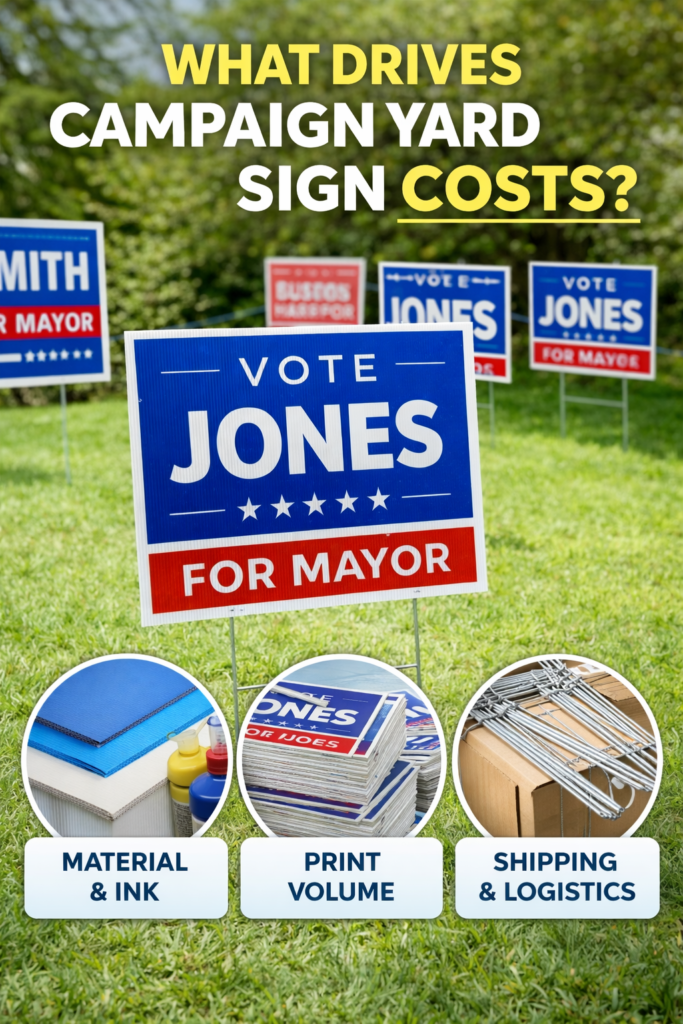
Corrugated plastic is the industry standard for a reason, offering the best balance of weight and durability for outdoor use. However, the price of this raw material can fluctuate based on global supply chains and the cost of oil. Choosing a thicker grade of plastic ensures the sign stays upright in the wind but also increases the unit price significantly.
Ink selection is another hidden driver of cost that most people overlook during the initial design phase of the project. Using standard spot colors is much cheaper than full-color digital printing, which requires more specialized equipment and time. The chemical composition of the ink also determines how well the colors will resist fading when exposed to direct sunlight for weeks.
Teams must weigh the benefit of a premium look against the reality of their available funds during the heat of the race. A sign that looks great but costs too much might limit the total number of locations a candidate can actually cover. Finding the middle ground between high-quality materials and affordable production is a core skill for any successful campaign manager.
Volume Discounts and Runs
Economies of scale are the most powerful tool a large campaign has for reducing its overall marketing expenses per voter reached. Print shops have high fixed costs for setting up a new job, including cleaning screens and adjusting the alignment of the presses. Once the machines are running, the cost to produce each additional board drops dramatically for the customer.
Small orders of fifty or a hundred signs often carry a much higher unit price than an order for several thousand at once. This forces smaller, grassroots operations to be much more selective about where they place their materials across the neighborhood. They lack the “show of force” that a well-funded opponent can achieve through a massive bulk purchase of thousands of boards.
Smart teams often pool their orders with other local candidates to reach higher discount tiers and save money for everyone involved. This collaborative approach allows for a more professional look for the entire slate of candidates without draining individual budgets too early. Managing these production runs requires careful coordination and a clear understanding of the manufacturing timeline.
Design Setup Expenses
The labor involved in preparing a design file for the printing press is a significant portion of the initial setup fee. Professionals must ensure that the graphics are perfectly aligned and that the colors will reproduce accurately on the specific substrate chosen. Any errors at this stage can lead to thousands of wasted boards that cannot be used by the team.
Proofing is a mandatory step that involves checking every line of text and every legal disclaimer for total accuracy before production begins. A single typo in a phone number or a misspelled name can be a public relations disaster for a candidate. Taking the time to review the digital mockups prevents expensive mistakes and ensures a professional final product.
Simple designs with high contrast are not only more effective on the street but are also easier and cheaper to prepare for print. Avoiding complex gradients or photography allows for a faster setup and a more consistent look across different batches of material. Efficiency in design translates directly into financial savings that can be used for other vital campaign activities.
Shipping and Logistics Fees
Transporting heavy pallets of plastic and metal stakes across the country is an expensive logistical challenge for any organization. Freight costs can add twenty or thirty percent to the total invoice if the materials are being shipped from a distant manufacturing facility. Choosing a local vendor can save thousands of dollars in transportation fees while supporting businesses in the community.
The weight of the wire H-stakes is a major factor in the final shipping weight of the order for the campaign. These metal components are essential for installation but are often the most expensive part of the shipment to move. Some teams choose to source their stakes separately to take advantage of local pricing or to reduce the overall weight of the package.
Storage and distribution also require a dedicated space and a reliable plan for getting the materials into the hands of volunteers. Renting a climate-controlled unit or using a garage adds another layer of cost and coordination to the process. Logistics is the invisible engine that turns a pile of boxes into a visible and effective presence in the neighborhoods.
Conclusion
Understanding the true drivers of expense allows a candidate to maximize their impact while staying within the boundaries of their budget. It turns a simple purchase into a strategic investment that supports the overall goals of the organization during the election. Every dollar saved on production is a dollar that can be spent on reaching a new audience.
A professional approach to procurement involves looking at the entire lifecycle of the materials from the factory to the trash bin. By accounting for materials, volume, design, and logistics, a team can avoid the surprises that often derail a grassroots effort. Financial discipline is just as important as a good message when it comes to winning a local race.
Ultimately, the goal is to build a consistent and recognizable brand that stays in the minds of the voters until election day. Careful planning and a respect for the math of production ensure that the candidate remains visible throughout the entire district. Mastering the components of cost is a vital step toward a successful and sustainable campaign.