



It doesn’t really matter on which side of the climate change debate you happen to be on; the one thing that most of us can probably agree on is that we are living in a time where weather patterns aren’t as reliable as they used to be. Additionally, when the seasons for inclement weather begin rolling around, they tend to be far more destructive than before, causing millions of dollars’ worth of damage.
Aside from the damage caused, adverse weather can cause electrical systems to overload or destroy the transmission systems designed to transfer power from the source of energy to our homes. And, seeing as how unbelievably reliant we have become on energy, when the power shuts off for whatever reason, we feel the adverse effects far more acutely. But this needn’t be your fate, and with a few precautions in terms of backup power, you can ensure that, at the very least, you will have enough power to keep your essentials running until the power company turns the grid back on.
Table of Contents
Why Backup Power Matters Now More Than Ever
As we alluded to in the introduction, we can never be 100% sure of what might hit us that would bring down the grid. The most likely suspects are bad weather and human error, but in an increasingly dangerous and connected world, another very real risk includes state-sponsored hacking groups taking advantage of an increasingly outdated grid. When it comes to risks such as these, you really need to prepare yourself by installing something like a generator run off fuel from a dedicated generator fuel tank to ensure any kind of longevity time-wise. So what are the primary risks that could actually strike in the current state of the world?
- Aging and overloaded grid infrastructure: With all of the bad news that we currently have to contend with whenever we dare to look at our social media feeds, perhaps the most likely culprit that would cause your power to go out is the current state of the grid. Almost all developed countries are facing critical issues with old infrastructure that causes it to become overloaded when demand is high (which also happens to be increasing each year) or difficult to repair when something goes awry.
- Severe weather events: Whether you believe climate change is man-made or due to a natural shift in the climate matters not. What does matter is the fact that weather patterns are becoming increasingly more challenging to predict, and when bad weather hits, it tends to be far worse than it used to be. This can cause all manner of problems for an already stretched electrical grid.
- Cyberattacks and physical attacks on the grid: Although not as likely, these can still occur. It could be from a domestic terrorist seeking to wreak havoc, or foreign powers probing the nation’s preparedness.
Assess Your Actual Power Needs Before Buying Anything
Now that you have been well and truly convinced of the need for some kind of backup power solution, the next step is to figure out your needs. There is no use investing in a tiny, portable solar array if you have a large family and a power home. Conversely, it’s easy to spend a fortune on an industrial-grade generator when all you need to do is charge up your phone and perhaps keep your freezer running. A few rules of thumb to help you in this task include:
- Make a list of must-run appliances during an outage.
- Note the running Watts and starting Watts of each appliance (some will require a surge of power to turn on before settling down).
- Decide on what an acceptable level of comfort means to you and your family. For instance, do you only need enough power for a small light and to charge your phone, or will you need your entire home to stay powered at all times?
Typical Appliance Wattages
| Appliance | Running Watts | Starting Watts |
| Refrigerator/Freezer | 600-800 | 1,200–2,200 |
| Sump Pump (1/3 HP) | 800–1,050 | 1,300–2,500 |
| Furnace Blower (1/3 HP) | 600–800 | 1,300–2,300 |
| Window AC (10,000 BTU) | 1,200 | 3,600 |
| Well Pump (1/2 HP) | 1,000 | 2,100 |
| LED Lights (10 bulbs) | 100 | 100 |
| Wi-Fi Router + Phones | 50 | 50 |
| Whole-house (large load) | 6,000–10,000 | Varies |
Using this data and any more distinct data you can get for your specific appliances, you should be able to conclude what sort of backup power device you will need.
Understanding The Types Of Backup Power Systems
So what option do you actually have at your disposal if you’re serious about becoming more prepared? Well, fortunately, there are quite a few, and just like everything in life, you will probably get the most by selecting a few different options for different jobs.
Standby Generators
These are arguably going to be your best option in terms of power output when you need it. They are essentially permanently installed in or by your home and activate as soon as grid power shuts off. The advantage they have over other options is that they can often provide the most power and will activate without much effort on your part. The downside is that they are more costly and will require ongoing maintenance to keep them in working order.
Portable Generators
Even if you choose any other option in this list, owning at least a small 5–7.5 kW generator is a must. You can choose any size, all the way up to monster 20 kW options that can power entire homes. They are relatively affordable and run on standard diesel. The con being that they are noisy and some might not be rated to run for very long lengths of time.
Solar Backup Systems + Battery Storage
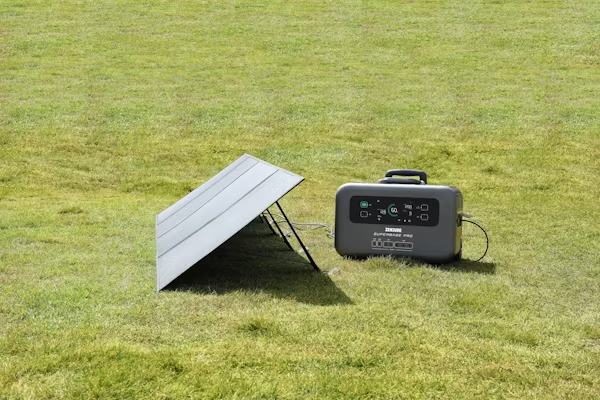
Solar is an excellent option for anyone who might not have the chance to invest in a dedicated fossil fuel generator. As long as you have a large enough array and a decent battery storage system, you should be able to run a small home and peripherals indefinitely. But they are expensive and simply don’t have the same amount of power as a fuel generator.
Investing in a reliable power backup option is something all responsible homeowners really ought to consider. You never know when the grid will go down or for what reason, but being able to power your home while it happens is a luxury that is easy to attain.