




Table of Contents
History of Challenge Coins
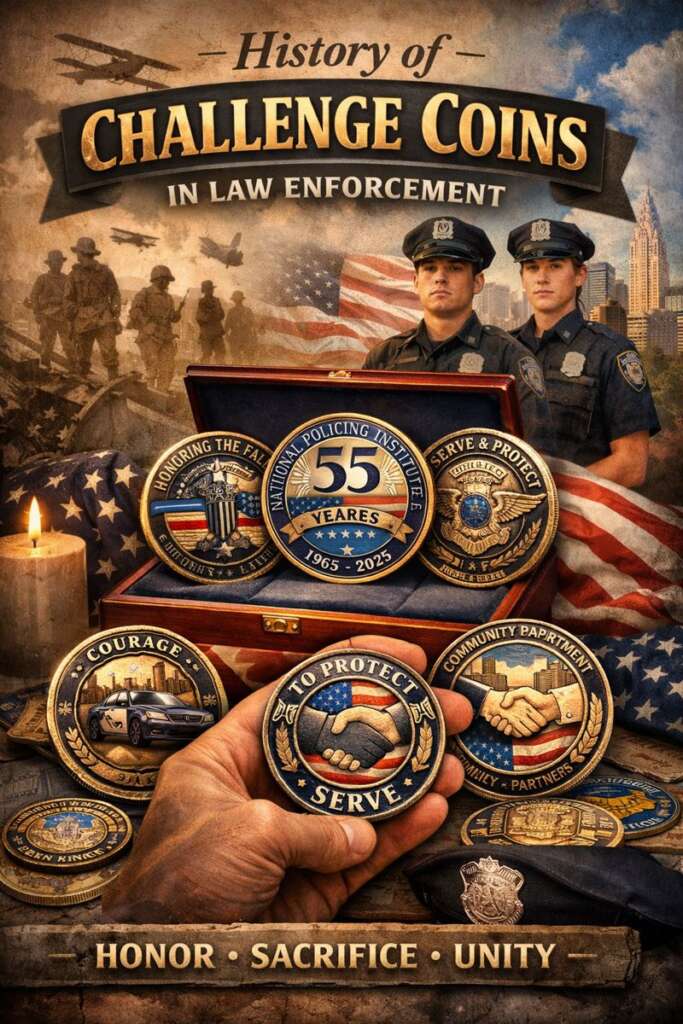
The tradition of challenge coins traces its heritage to World War I, where elite military units used coins as tangible symbols of loyalty, identity, and mutual support. These coins, often stamped with unique emblems or insignia, granted a sense of belonging and served as proof of membership. Over the following decades, the practice expanded across military branches and was soon adopted by civilian organizations seeking to honor their own traditions.
Today, the tradition thrives in law enforcement, where police challenge coins have become cherished tokens within departments and among personnel. These coins commemorate not just the unity and heritage of policing but also individual and collective acts of valor and dedication. The continued popularity of challenge coins reflects a profound respect for service, sacrifice, and the enduring spirit that shapes law enforcement communities.
Departments nationwide use challenge coins during key moments such as promotions, retirements, or acts of heroism, making them treasured keepsakes that link actions to community honor. As the tradition moved from armed forces to police, it evolved to reflect law enforcement’s unique ethos, emphasizing unity, commemoration, and morale. Agencies see challenge coins as tools to foster camaraderie and recognition for achievements, training, or high-profile efforts. Coins are exchanged in ceremonies, reinforcing shared values. Agencies customize coins to reflect their identity, mark membership or years of service, and give recipients a sense of belonging beyond simple recognition.
Symbolism and Design
The design of each challenge coin is deeply meaningful. Law enforcement agencies commonly feature their official insignia, mottos, and colors, blending history and pride. Many coins carry additional layers of symbolism, including tributes to fallen officers, significant milestones, or critical incidents in a department’s history. It’s not unusual for coins to bear inscriptions reflecting the department’s core values, underscoring the principles that guide its mission and daily work.
A typical coin’s craftsmanship may include detailed engravings, three-dimensional reliefs, or custom enamel coloring to ensure every detail stands out. Some agencies incorporate local landmarks, historical references, or inspirational sayings, thereby enhancing the coin’s emotional impact and uniqueness. These creative choices ensure that each coin is not only a collector’s item but also a badge of honor reflecting individual and organizational legacy.
Commemorating Service and Sacrifice
Law enforcement agencies use challenge coins to acknowledge extraordinary dedication and acts of bravery. These tokens serve as enduring reminders of the courage and commitment officers display every day. A notable example is the National Policing Institute’s 2025 challenge coin, released to mark its 55th anniversary and to recognize decades of support for the law enforcement profession. Coins like these enhance the sense of pride and history within departments, providing tangible proof of service and sacrifice.
Nationally, many organizations and local departments issue memorial coins to honor fallen officers. These coins often become cherished possessions among colleagues and family members, serving as a lasting tribute to those who have made the ultimate sacrifice. According to the New York Times, commemorative practices play a significant role in supporting grieving families and reinforcing department solidarity in the wake of tragedy.
Boosting Morale and Unity
The impact of challenge coins extends well beyond their symbolic value. At their core, these tokens strengthen interpersonal bonds and build a resilient sense of unity among officers. When an officer receives a coin, it fosters a sense of recognition and appreciation, reinforcing motivation and loyalty. In challenging or stressful times, holding a commemorative coin can remind officers of their achievements and the collective mission they serve.
Departments report that regular use of challenge coins creates an environment where milestones, both large and small, are celebrated. This culture of recognition breeds mutual respect and fosters open communication within teams. Ultimately, morale soars when officers feel seen and valued, and challenge coins are often at the heart of this positive change.
Community Engagement and Fundraising
Challenge coins have also taken on a public-facing role in community relations and fundraising. Many agencies offer special edition coins for sale or as tokens of appreciation to civic partners, volunteers, or supporters. The funds raised often support crucial programs such as officer wellness, youth outreach, and the preservation of memorials honoring officers who have died in the line of duty.
A prominent example is the National Law Enforcement Officers Memorial silver dollar. Released as a fundraising initiative, this coin’s proceeds help maintain the national memorial dedicated to America’s fallen law enforcement officers.
Community engagement doesn’t stop at fundraising. According to USA Today, tangible efforts that strengthen the relationship between law enforcement and the public are critical to building trust and ensuring safer communities. Challenge coins, given as tokens of gratitude to community partners and citizens, play a small but meaningful role in this broader mission.
Evolution of the Tradition
While challenge coins remain, their use continues to evolve. New designs include 3D models, and distribution now involves public events and digital campaigns. Coins mirror law enforcement’s changing face and enduring values. Agencies use challenge coins to support recruitment, retention, and community ties, showing pride in this tradition rooted in history and stories of courage and service.
Conclusion
Challenge coins have earned a permanent place in modern law enforcement culture. From their origins as military relics to their status as emblems of honor and morale in police departments nationwide, these tokens continue to celebrate unity, recognize sacrifice, and deepen the legacy of service within and beyond law enforcement ranks. As the tradition advances, it remains a testament to the enduring dedication of those who protect and serve our communities.