




As organizations navigate an increasingly complex technological landscape, the need for effective, agile IT management has never been more urgent. Businesses now generate unprecedented amounts of data, creating both challenges and opportunities for IT leaders. The adoption of data-driven decision-making (DDDM) strategies is proving crucial for those seeking to maintain a competitive edge. By leveraging actionable insights from data, IT managers strengthen operational efficiency and facilitate innovation. Companies looking to optimize their technology investments are increasingly turning to managed IT services to ensure streamlined operations and robust data practices.
The fundamental shift from intuition-based choices to evidence-based strategies allows organizations to respond proactively to rapidly evolving challenges. Data-driven frameworks empower teams to anticipate disruptions effectively, improve service delivery, and allocate resources with precision. As digital transformation accelerates, harnessing the true value of organizational data becomes essential. Implementing robust DDDM frameworks is vital not just for long-term growth but for day-to-day resilience and agility. These initiatives also position organizations to seize new opportunities by revealing unseen market and operational insights.
Table of Contents
Understanding Data-Driven Decision-Making
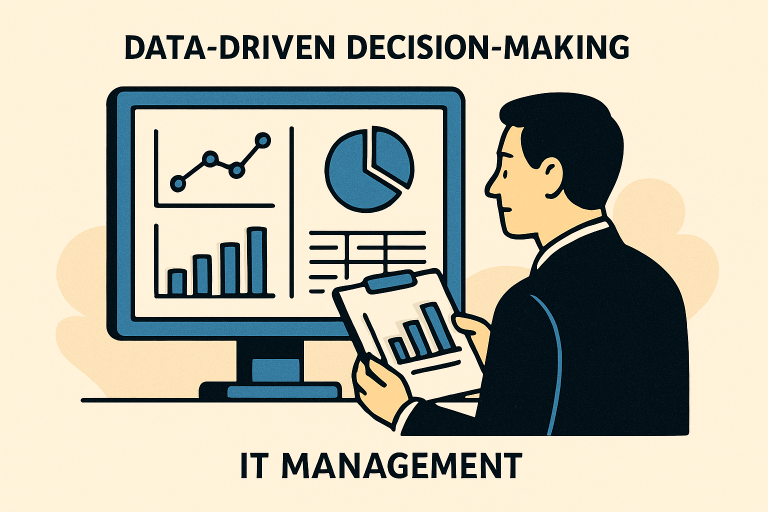
Data-driven decision-making refers to the use of quantifiable data to guide strategic planning and resolve day-to-day IT issues. This approach differs significantly from traditional decision-making workflows, which rely heavily on intuition or limited anecdotal evidence. By prioritizing carefully collected and validated data, organizations can detect trends, spot inefficiencies, and identify risks before they impact business operations. In the IT context, DDDM powers predictive maintenance, optimal resource allocation, and responsive service delivery, all of which are vital in today’s high-stakes environment.
Benefits of DDDM in IT Management
- Enhanced Operational Efficiency: Through performance monitoring and analytics, IT managers identify areas for improvement. This leads to streamlined processes, faster incident resolution, and fewer resource bottlenecks.
- Risk Mitigation: Predictive analysis tools can alert teams to potential system failures or vulnerabilities in advance, enabling proactive countermeasures that minimize downtime and disruption.
- Driving Innovation: Data analytics highlight evolving user needs and emerging market opportunities, providing a foundation for launching new products, services, or digital capabilities ahead of competitors.
Modern business requires agility, and DDDM gives organizations the clarity needed to pivot or refine IT strategies with confidence. Executive teams are empowered to justify investments and policy changes with concrete evidence rather than speculation, leading to more transparent and repeatable decision cycles.
Implementing DDDM Strategies
- Establish a Robust Data Infrastructure: Reliable and scalable infrastructure serves as the foundation for all analytics. Organizations must invest in data warehouses, business intelligence platforms, and integration tools that unify inputs from disparate IT systems.
- Develop Analytical Capabilities: Training existing staff in essential data skills is necessary, but so is the strategic hiring of data engineers and scientists. These experts translate raw information into actionable reports and visualizations.
- Foster a Data-Centric Culture: Creating a culture in which decision-makers value and use analytics is as important as deploying the technology itself. This involves regular workshops, clear communication of data’s value, and the involvement of all departments in the data journey.
Overcoming Challenges in DDDM
- Data Silos: Disconnected systems limit comprehensive analysis. Integrated platforms break down barriers, producing a holistic data ecosystem that supports more meaningful insights.
- Data Quality: Incomplete or erroneous data skews analytics. Continuous auditing, standardizing entry methods, and deploying validation tools are necessary to maintain data integrity.
- Change Resistance: Human factors pose significant implementation challenges. Change management initiatives and early demonstration of DDDM’s impact drive user adoption and reduce resistance.
Gartner highlights the importance of employing thoughtful change management and governance policies to address cultural obstacles and attitude shifts that frequently accompany DDDM transformations.
Case Study: Successful DDDM Implementation
A well-known multinational company faced obstacles in managing its sprawling IT resources. Through a systematic shift to data-driven IT management, the firm experienced measurable results. The company’s new approach included implementing real-time system monitoring, historical data analysis to preempt outages, and intelligent resource allocation. Over just one year, these initiatives contributed to a 20 percent decrease in downtime and a 15 percent reduction in operational costs. This practical example demonstrates the tangible benefits of strategic DDDM implementation.
Future Trends in DDDM
- Integration of Artificial Intelligence: Integrating AI into analytics amplifies the speed and depth of insights. AI-driven automation is expected not only to enable faster decisions but also to uncover hidden patterns beyond human detection.
- Real-Time Analytics: Streaming data and edge computing enable organizations to react to anomalies or trends as they occur. This immediacy is crucial for mission-critical IT operations.
- Data Democratization: Increasingly, businesses are making data and analytics tools accessible to a wider range of employees, unlocking collective intelligence and fostering innovation at all levels.
Conclusion
The shift to data-driven decision-making within IT management is not simply a trend but a necessity in today’s complex business environment. By strengthening data infrastructure, equipping teams with analytics skills, and building a culture that trusts data, organizations optimize performance and gain strategic agility. The benefits of this shift are clear and measurable. As more companies adopt robust DDDM standards, those that lag behind risk losing their edge. Proactive leadership will continue to shape the future of IT management, ensuring not just survival but sustained growth in an increasingly data-centric world.