




Table of Contents
Introduction to Clinical Trial Ethics
Clinical trials drive the advancement of modern medicine by testing new therapies, devices, and interventions to improve health outcomes. While progress in research brings hope, it also demands strict adherence to ethical protocols to ensure participant safety, respect, and fairness. Upholding these ethical standards is crucial not only for those involved in the trials but also for maintaining trust with the broader public. For anyone interested in learning more about the conditions studied in clinical trials, comprehensive resources are available to shed light on the wide variety of ongoing clinical investigations.
The evolution of ethical guidelines in clinical research is rooted in past challenges and abuses, which have shaped today’s balanced approach to participant protection and scientific advancement. Regulatory authorities and international agreements have established a framework that ensures every individual’s welfare is prioritized throughout the research process.
Core Ethical Principles in Clinical Research
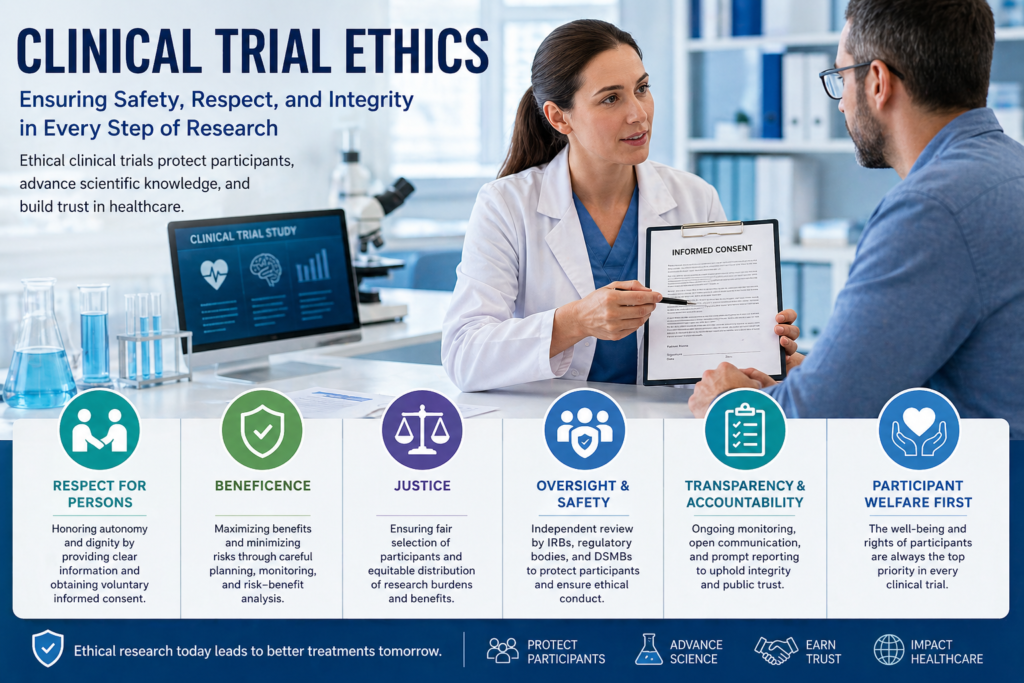
At the heart of all ethical clinical trials are three foundational principles, as articulated in the widely recognized Belmont Report:
- Respect for Persons: This principle underscores the importance of honoring the autonomy and dignity of every participant. Researchers are obligated to provide clear information so individuals can make informed decisions about their involvement.
- Beneficence: The commitment to maximize positive outcomes while diligently minimizing the potential for harm guides every action within clinical research. Researchers are required to conduct careful risk-benefit analyses before enrolling participants.
- Justice: Ensuring that the burdens and benefits of research are fairly distributed across diverse populations is essential. Selection of participants must be based on scientific criteria, avoiding any form of exploitation or discrimination.
These core principles influence every aspect of clinical trial design, implementation, and oversight, shaping a culture that prioritizes the rights and well-being of all involved.
Informed Consent: A Cornerstone of Ethical Research
Securing informed consent from each participant is not simply paperwork; it is a critical exchange that ensures transparency and respect. The informed consent process educates volunteers about the study’s goals, expected procedures, potential risks and benefits, and their rights to withdraw at any time without penalty. This approach nurtures a trusting relationship between researchers and participants, reinforcing the understanding that no individual is ever compelled or misled into participating.
Special considerations must be given to potentially vulnerable groups, such as minors or individuals with limited decision-making capacity. In these cases, additional safeguards and clear communication with legally authorized representatives are required to maintain ethical compliance.
Moreover, the documentation required for informed consent is continually updated to reflect evolving ethical norms and legal requirements. Researchers often employ multimedia presentations and lay-friendly explanations to ensure comprehension, especially in multinational or multicultural studies. This added emphasis on clarity and understanding further empowers participants, supporting equitable participation and valid consent across diverse backgrounds. By tailoring the consent process to cultural or linguistic needs, barriers to participation are reduced, promoting both inclusivity and fairness in clinical research.
Safeguards and Oversight Mechanisms
Ethical standards in clinical trials are upheld by multiple independent bodies. Before any trial begins, protocols are rigorously reviewed by Institutional Review Boards (IRBs). These committees assess scientific validity, risk mitigation, and adherence to ethical commitments. Similarly, regulatory bodies such as the Food and Drug Administration (FDA) offer public health oversight, reviewing trial data and monitoring ongoing compliance. Data Safety Monitoring Boards (DSMBs) further monitor ongoing trials, pausing or halting research if unexpected hazards arise.
These layered systems of oversight work in tandem to identify and address any issues quickly, fostering an ethical culture throughout clinical research. Beyond these primary bodies, the role of independent ethical consultants and community advisory panels is increasingly recognized in modern trials. These additional entities contribute to continual ethical appraisal and support public engagement, especially for research conducted in underserved communities. This multidimensional framework helps address emerging ethical challenges and ensures that diverse voices are acknowledged, reinforcing transparency and accountability throughout the research process.
Addressing Ethical Violations
No system is perfect, and even with established safeguards, ethical violations occasionally occur. These can range from inappropriate participant recruitment practices to failures in reporting adverse effects. Swift recognition and response are critical. Education and open communication empower research personnel and participants alike to recognize lapses and report concerns to oversight boards or regulatory bodies. Addressing such violations promptly preserves the scientific integrity of the research and the rights of those involved.
Additionally, ethical training is now a routine part of staff development in research organizations. Training initiatives emphasize recognizing conflicts of interest, managing ethical dilemmas, and communicating transparently about potential risks, ensuring that staff members uphold integrity and foster a respectful research climate. By integrating these practices into the organizational culture, potential violations can be identified and corrected at earlier stages, reducing the risk of harm or controversy for all stakeholders.
Ethical Challenges in Accelerated Trials
Periods of public health crisis, such as the COVID-19 pandemic, highlight unique ethical dilemmas. Accelerated trials are designed to expedite the development and approval of therapies under urgent circumstances. However, this increased pace raises the risk that some ethical considerations, such as comprehensive informed consent or sufficient participant monitoring, may be overlooked. Striking a balance between urgency and caution is essential, ensuring that speed never comes at the expense of participant welfare.
Furthermore, global emergencies intensify the ethical pressure to collaborate and share data swiftly between organizations and countries. This unprecedented situation elevates the need for harmonized protocols and transparency, as well as public communication strategies to prevent misinformation. Ensuring equitable access to effective therapies, especially in resource-limited settings, is another urgent ethical issue that must be addressed to realize the full benefits of rapid scientific progress worldwide.
Final Thoughts
Ethical integrity is the backbone of credible and humane clinical research. From strict adherence to foundational principles and thorough informed consent procedures to robust oversight and prompt response to challenges, each aspect of the process is designed to protect participants and promote scientific progress. As research continues to evolve, an ongoing commitment to ethical standards will remain the guiding light for researchers aiming to improve human health while upholding public trust.
The future of clinical trial ethics rests upon constant vigilance, adaptability, and collaboration among researchers, regulators, and the public. By fostering dialogue, embracing innovation in oversight, and prioritizing the values at the core of ethical research, the clinical research community can ensure that advancements in medicine are achieved with both scientific rigor and unwavering respect for human dignity.