


A motorcycle collision can turn an ordinary ride through Las Vegas into a stressful chain of medical appointments, repair problems, insurance calls, and missed work. Whether the crash happens near the Strip, on I-15, along Summerlin Parkway, or at a busy neighborhood intersection, the first decisions can affect both physical recovery and a future claim for compensation for injured motorbikers.
Legal representation is not a substitute for emergency care or careful reporting, but it can help an injured rider understand the process, preserve important information, and respond thoughtfully when fault or insurance coverage is disputed. The priority immediately after any crash is always personal safety.
Table of Contents
- 1 Focus On Safety In The First Minutes
- 2 Check For Injuries And Seek Medical Care
- 3 Report The Crash And Exchange Information
- 4 Document The Scene Without Creating More Risk
- 5 Preserve The Motorcycle, Gear, And Records
- 6 Handle Insurance Conversations With Care
- 7 How Fault May Be Reviewed
- 8 Track Recovery Costs And Daily Limits
- 9 Common Mistakes To Avoid
- 10 Common Questions After A Motorcycle Crash
- 11 Final Takeaway
Focus On Safety In The First Minutes
Adrenaline can make pain, danger, and confusion harder to recognize. If possible, move out of active traffic, but do not take risks around fuel leaks, smoke, fire, broken glass, or downed power lines. Call 911 if anyone may be injured or if the road remains hazardous. Do not move an injured person unless immediate danger makes it necessary. Photos and property concerns can wait until people are safe.
Check For Injuries And Seek Medical Care
Some injuries are not fully apparent at the scene. Confusion, worsening headache, repeated vomiting, numbness, weakness, neck or back pain, chest pain, breathing trouble, and heavy bleeding all require prompt attention. Follow-up care also matters when symptoms develop later, especially after a rider initially believes they are only sore or shaken up.
Helmets can reduce the risk of head injury, but no helmet makes a crash harmless. The CDC’s motorcycle safety information underscores the serious consequences of motorcycle crashes. Keep records of emergency treatment, follow-up visits, prescriptions, therapy recommendations, and provider instructions.
Report The Crash And Exchange Information
Contact the appropriate law enforcement agency and ask how to obtain the incident or report number. Exchange names, phone numbers, driver’s license details, vehicle information, and insurance information with the other parties. If witnesses stop, collect their names and contact details before they leave.
A report can help preserve basic details such as location, time, vehicles, traffic controls, and responding personnel. Keep comments brief and accurate. Avoid arguing about blame or guessing about speed, injuries, or what another driver saw.
Document The Scene Without Creating More Risk
When it is safe, take wide and close photographs or video of the motorcycle, every involved vehicle, license plates, lane markings, road signs, signals, debris, skid marks, lighting, and pavement conditions. In Las Vegas, visibility can change quickly due to darkness, glare, construction, and heavy traffic, so details that seem minor may prove useful later.
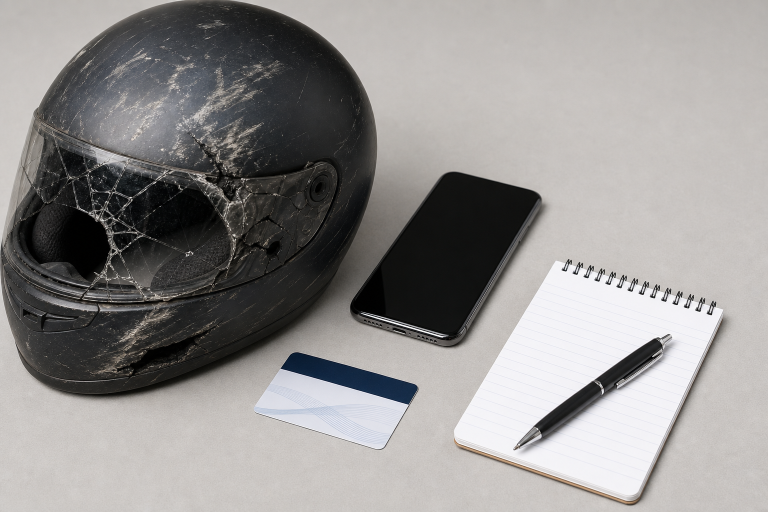
Also, photograph damaged protective equipment, including the helmet, jacket, gloves, boots, and riding pants. Save the original image and video files rather than relying only on edited copies or social media posts. Nearby businesses, homes, traffic cameras, and vehicle cameras may also have recordings that may not be retained indefinitely.
Preserve The Motorcycle, Gear, And Records
Do not repair, sell, discard, or substantially alter the motorcycle or damaged gear before they have been thoroughly documented. Damage patterns can help explain the force and direction of an impact. Keep towing and storage invoices, repair estimates, inspection reports, receipts, messages, and witness information in one organized file.
- Keep the damaged helmet and clothing.
- Back up photographs and video in more than one place.
- Save all insurance letters and emails.
- Store paper records and digital copies together.
Handle Insurance Conversations With Care
Notify your own insurer within the time required by the policy. Provide straightforward facts, obtain a claim number, and record the adjuster’s name and contact information. It is reasonable to ask what documents are needed and to keep a written log of phone calls.
Be cautious about estimating long-term medical needs, lost income, or fault before the full situation is known. A release or settlement document may affect rights connected to the claim, so it should be read carefully. A Las Vegas motorcycle accident lawyer can evaluate available coverage, communications from insurers, and whether a proposed resolution accounts for documented losses.
How Fault May Be Reviewed
Responsibility is often evaluated through more than one source. Useful evidence may include traffic laws, witness accounts, police reports, crash diagrams, photographs, video, vehicle damage, debris location, weather, lighting, and road conditions. A driver’s statement at the scene is not necessarily the final word on fault.
Nevada law can apply comparative-fault principles in injury cases, which makes a careful factual review important when more than one person may be alleged to share responsibility. Legal counsel can examine the evidence, identify gaps, and help ensure the rider’s account is supported by records rather than assumptions.
Track Recovery Costs And Daily Limits
Create a recovery file that includes medical bills, prescriptions, mileage to appointments, therapy, missed shifts, reduced work duties, and household assistance. A short daily journal can document pain levels, sleep problems, mobility limits, mood changes, and activities that have become difficult.
For example, shoulder pain that worsens several days after a crash may interfere with lifting, driving, or job performance. Written notes made close to the event can be more useful than trying to reconstruct those limitations months later.
Common Mistakes To Avoid
- Leaving before reporting duties are completed.
- Assuming a low-speed crash caused no injury.
- Throwing away a damaged helmet or jacket.
- Repairing the motorcycle before taking clear photos.
- Posting arguments or opinions about the crash online.
- Giving a detailed statement while confused or medicated.
- Accepting payment without reviewing the related release.
- Skipping recommended medical follow-up.
Common Questions After A Motorcycle Crash
What If The Crash Seems Minor?
Exchange information, document the scene safely, and monitor symptoms. Seek medical advice if pain, dizziness, numbness, headaches, or other concerning symptoms appear.
Should A Rider Talk To The Other Driver’s Insurer?
A rider may need to communicate about the crash, but should stick to known facts and avoid speculation about fault, future treatment, or the full financial impact of injuries.
How Long Should Crash Evidence Be Kept?
Keep photos, gear, repair records, medical records, correspondence, and other crash-related materials until the insurance claim and any related legal matter are completely resolved.
What Safety Steps Can Help Prevent A Future Crash?
Wear a compliant helmet, remain visible, inspect tires and brakes, ride sober, leave room around other vehicles, and use added caution at intersections. Federal motorcycle safety guidance also emphasizes visibility, protective gear, alert driving, and responsible riding.
Final Takeaway
After a Las Vegas motorcycle crash, protect people first, report the collision, get appropriate medical care, document what can be documented safely, and preserve records and physical evidence. A clear approach can reduce uncertainty in the first hours and provide an injured rider with a stronger foundation for recovery and legal representation.


