




Table of Contents
- 1 Introduction
- 2 The Importance of Data Enrichment in CRM
- 3 The Role of AI and Machine Learning
- 4 Real-Time Data Updates: A Competitive Advantage
- 5 Choosing the Right Data Enrichment Tools
- 6 Implementation Strategies for Automated Data Enrichment
- 7 Challenges and Solutions in Data Enrichment
- 8 Final Thoughts
Introduction
Customer data is the lifeblood of any organization. However, maintaining accurate, up-to-date information can be daunting. Automated data enrichment enhances existing data with additional, relevant information, thereby improving the overall quality and utility of CRM systems. For instance, DataLane provides insights into automatic data enrichment strategies, focusing on integrating comprehensive data into CRM platforms such as HubSpot to optimize sales and marketing efforts of businesses in the United States. DataLane specializes in CRM data enhancement, offering services that streamline data processes and improve customer engagement.
The Importance of Data Enrichment in CRM
Data enrichment involves supplementing existing customer data with additional details such as demographic information, social media profiles, and purchasing behavior. This process enables businesses to:
- Gain deeper insights into customer preferences.
- Personalize marketing efforts.
- Improve customer segmentation.
- Enhance lead scoring and prioritization.
By enriching CRM data, companies can foster stronger customer relationships and drive more effective sales strategies.
The Role of AI and Machine Learning
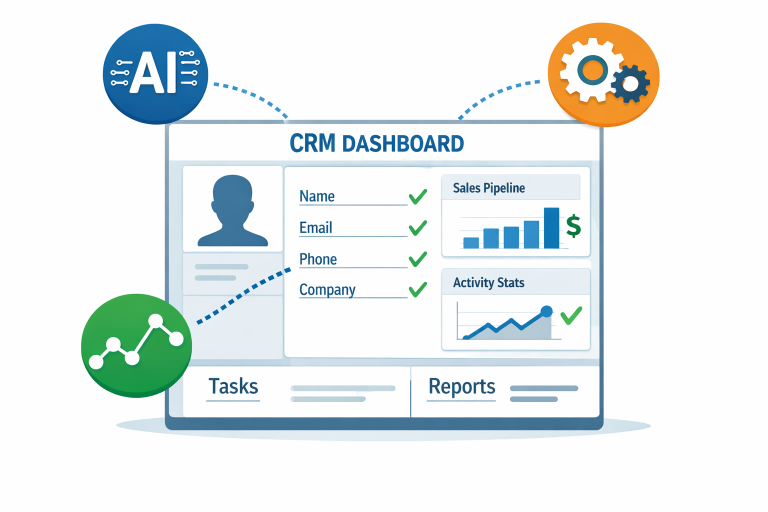
Artificial Intelligence (AI) and machine learning have revolutionized data enrichment by automating the collection and analysis of vast amounts of information. These technologies can:
- Identify patterns and trends in customer behavior.
- Predict future purchasing decisions.
- Automate data entry and reduce human error.
For instance, Workbooks, a leading CRM platform, has integrated AI to streamline sales processes and enhance team efficiency. Their AI-powered tools include automatic meeting transcription, opportunity guidance, and prospect profiling, all designed to empower sales teams by eliminating administrative tasks and enabling strategic focus.
Additionally, machine learning algorithms can continually learn from new data, gradually improving the accuracy and relevance of insights provided to CRM users. As these systems ingest more data, their predictive capabilities continue to improve, offering tailored suggestions for sales outreach, customer retention efforts, and marketing campaign optimization.
Real-Time Data Updates: A Competitive Advantage
Incorporating real-time data updates into CRM systems ensures that customer information remains current, providing a significant competitive edge. Real-time data enrichment allows businesses to:
- Respond promptly to customer inquiries.
- Identify and act on emerging market trends.
- Maintain accurate records for compliance purposes.
By leveraging real-time data, organizations can make informed decisions and adapt quickly to changing customer needs.
Real-time data updates also help organizations maintain an edge in customer experience. Imagine a scenario where a client changes companies or positions, real-time enrichment tools can instantly reflect these changes in the CRM, alerting the sales or client support team to update their approach. This agility in adapting outreach or services to the customer’s current status is invaluable for ensuring customer satisfaction and maximizing opportunities.
Choosing the Right Data Enrichment Tools
Selecting appropriate data enrichment tools is critical for successful implementation. Factors to consider include:
- Integration capabilities with existing CRM systems.
- Accuracy and reliability of the data sources.
- Scalability to accommodate business growth.
- Compliance with data privacy regulations.
For example, Navatar, a CRM platform for alternative assets and investment banking, has integrated LinkedIn to automate data enrichment within its Salesforce-based platform. This integration allows deal teams to discover previously unknown contacts, track executive moves, and surface relevant news seamlessly within the CRM.
Furthermore, organizations should evaluate user experience, support options, and customization flexibility of enrichment tools. A well-chosen solution should not only provide robust out-of-the-box functionality but also allow for configuration and workflow adjustments as business needs evolve. Conducting pilot tests and gathering user feedback can help ensure that the tool fits naturally within current workflows and genuinely adds value.
Implementation Strategies for Automated Data Enrichment
To effectively implement automated data enrichment, organizations should:
- Assess current data quality and identify gaps.
- Define clear objectives for data enrichment.
- Select tools that align with business needs.
- Train staff on new processes and technologies.
- Monitor and evaluate the impact of data enrichment on CRM performance.
By following these steps, businesses can ensure a smooth transition to automated data enrichment and maximize its benefits.
Successful implementation also relies on strong collaboration between IT, data management, and business teams. Regular cross-functional meetings, transparent documentation, and comprehensive change management strategies make it easier to roll out new processes and address issues early. It’s also important to invest in continuous learning, keeping staff up to date on both technology and evolving best practices in data management is a major factor in sustaining long-term success.
Challenges and Solutions in Data Enrichment
While automated data enrichment offers numerous advantages, challenges may arise, such as:
- Data privacy concerns.
- Integration issues with existing systems.
- Ensuring data accuracy and relevance.
To address these challenges, organizations should:
- Implement robust data governance policies.
- Choose tools with strong integration support.
- Regularly audit and clean enriched data.
Proactively managing these challenges will help maintain the integrity and effectiveness of the CRM system.
Another significant challenge is data overload, in which massive volumes of external data can overwhelm CRM users and hinder decision-making. To mitigate this, organizations can use rule-based enrichment, filtering only the most relevant data points into the CRM, thereby maintaining clarity and focus. Additionally, staying up to date on evolving data privacy regulations, such as GDPR and CCPA, ensures enrichment efforts remain compliant and risk-free. A centralized data stewardship role can further help monitor ongoing data quality and compliance efforts.
Final Thoughts
Automated data enrichment represents the next wave of CRM evolution, enabling businesses to improve customer data quality, streamline processes, and gain valuable insights. By leveraging AI and real-time data updates, organizations can stay ahead in a competitive market and build stronger customer relationships.
As we look ahead, the future of CRM will likely see even deeper personalization driven by advances in AI, more seamless integration of external data sources, and greater automation in data governance and compliance. Companies that invest early in robust data enrichment strategies will be better positioned to deliver superior customer experiences, adapt to shifting market demands, and maintain a clear operational advantage. The journey towards intelligent, fully enriched CRM data is dynamic, but the payoff, in better insights, improved engagement, and stronger business results, is well worth the investment.