



Dental implants are increasingly popular among those seeking a reliable, natural-looking solution for missing teeth. For many, the path to dental implants feels uncertain, but having a clear understanding of what to expect at each stage can make the process more comfortable and predictable. If you are considering this treatment, exploring what to expect from dental implants can help you prepare confidently for your journey. This guide will walk you through the dental implant process step by step, from initial assessment to long-term care, so you know precisely what lies ahead.
Your dentist will use a combination of assessments, procedures, and follow-up care to ensure the best results possible. Each step serves a specific purpose, from establishing whether you are a suitable candidate to measuring the health of your gums and jawbone. Understanding the stages will help you play an active role in your oral health and make well-informed decisions about your treatment.
By knowing what’s involved, you can minimize anxiety and anticipate timelines and healing requirements. As dental technology continues to advance, implant procedures are safer and more effective than ever before, with impressive long-term success rates. Taking the time to learn about each phase prepares you for a smoother recovery and a lasting, natural smile.
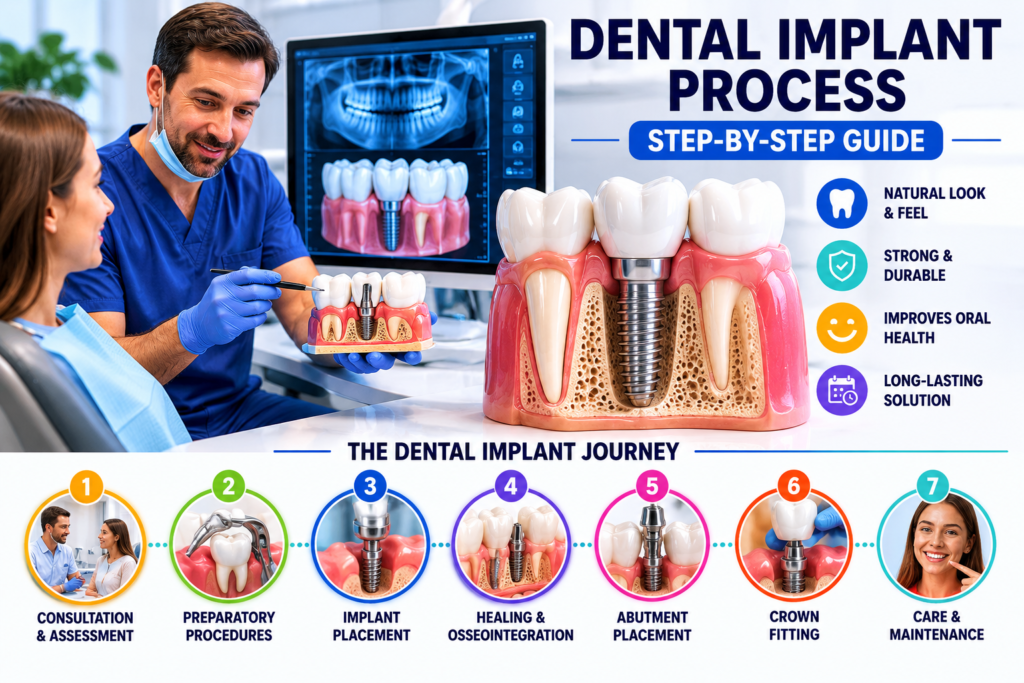
Table of Contents
Initial Consultation and Assessment
The first stage of the dental implant journey is a comprehensive assessment by your dental professional. This appointment usually includes several key steps:
- Medical History Review: Your dentist will ask about current medications and health conditions, such as diabetes, heart disease, or recent surgeries. These help determine if it is safe for you to undergo dental implant surgery.
- Oral Examination: The dentist evaluates the health of your gums and any remaining teeth, checking for signs of gum disease or other oral health concerns that may affect implant success.
- Imaging: Detailed images, like X-rays or 3D scans, assess bone density and identify where implants can be placed securely. If your jawbone is too thin or weak, you might need additional treatment before proceeding.
This thorough evaluation forms the foundation of your personalized treatment plan, paving the way for successful outcomes. It also gives you a chance to discuss your expectations and ask questions about the timing, costs, and alternatives for your individual case.
Preparatory Procedures
Depending on your oral health, you may need preparatory procedures before the implant can be placed. These are designed to create a healthy environment for your future implant:
- Tooth Extraction: If you have irreparably damaged or decayed teeth, they will need to be removed to make space for the implant.
- Bone Grafting: When jawbone density is insufficient, a bone graft can build up the area, allowing for proper implant support. This step ensures the implant anchors firmly, a crucial factor for long-term stability.
Both of these preparatory steps may add a few weeks or months to the total process, depending on the healing required.
Surgical Placement of the Implant
The placement of the dental implant is typically performed as an outpatient surgical procedure. Here is what this key phase entails:
- Anesthesia: Local anesthesia is used to numb the gum and bone tissue where the implant will be placed. Sedation options are available if you are anxious.
- Incision: The dentist makes a small cut in the gum tissue to expose the bone underneath.
- Drilling: Using a special drill, a hole is prepared in the bone for the implant post.
- Implant Insertion: The titanium post is then placed into the prepared bone socket.
- Suturing: Gum tissue is stitched to cover the implant, promoting healing and minimizing infection risk.
The duration of this surgery varies, but it is fairly short and straightforward for a single implant. You may receive pain medication or antibiotics to manage initial discomfort and prevent infection.
Healing and Osseointegration
After the implant post is inserted, the healing process, called osseointegration, begins. This stage is critical for success and usually spans three to six months:
- Osseointegration: During this time, the jawbone grows around and fuses with the implant, securing it like a natural tooth root.
- Temporary Prosthesis: For visible areas, your dentist may place a temporary crown or bridge while you heal, so you do not have to feel self-conscious about gaps in your smile.
Your dentist will schedule regular follow-ups to monitor your healing. Complications are rare but can be managed promptly if they arise. Guidance from your dental team will help you navigate this period successfully.
Abutment Placement and Crown Fitting
Once osseointegration is complete and your implant is securely fused to the jawbone, the next steps restore full function and appearance:
- Abutment Attachment: Minor surgery is performed to expose the implant and attach a connector (the abutment) that will hold your new tooth.
- Impressions: Impressions of your mouth help create a custom-fit crown that matches your surrounding teeth in color and shape.
- Crown Placement: The final, permanent crown is affixed securely to the abutment, giving you a tooth that looks and feels natural.
This stage marks the end of the primary procedure and the return of a confident smile. After the crown is placed, your dental team will show you how to care for your new implant to ensure lasting results.
Post-Procedure Care and Maintenance
Good oral hygiene and regular dental care are paramount after dental implant placement. Your commitment to at-home care and professional maintenance directly affects the implant’s longevity:
- Oral Hygiene: Brush and floss daily, paying special attention to areas around the implant.
- Dental Check-ups: Visit your dentist for routine assessments and cleanings every six months or as recommended.
- Avoiding Harmful Habits: Skip hard foods or ice that could damage the implant. If you smoke, quitting will greatly increase your chances of success.
Your dentist will provide specific care instructions and may recommend special cleaning devices or mouth rinses to support your oral health.
Potential Risks and Complications
Dental implant procedures are highly predictable with a strong track record of success. However, like any surgery, there are potential risks and complications to consider:
- Infection: Infection at the implant site can occur, particularly if aftercare instructions are not followed.
- Nerve Damage: Rarely, nerves near the implant may be affected, causing temporary or long-term numbness or discomfort.
- Sinus Issues: For implants in the upper jaw, there is a risk that they can intrude into sinus cavities, requiring additional intervention.
Discussing risks and how to mitigate them with your dental professional is an important part of the process. Promptly reporting any unusual symptoms or persistent pain can prevent most complications from becoming serious.
Conclusion
Being informed about what to expect during the dental implant process provides reassurance and empowers you to make the best choices for your oral health. With attentive care and guidance from your dental team, implants offer a dependable and attractive solution for filling gaps and restoring your smile for years to come.